

Welding Hose
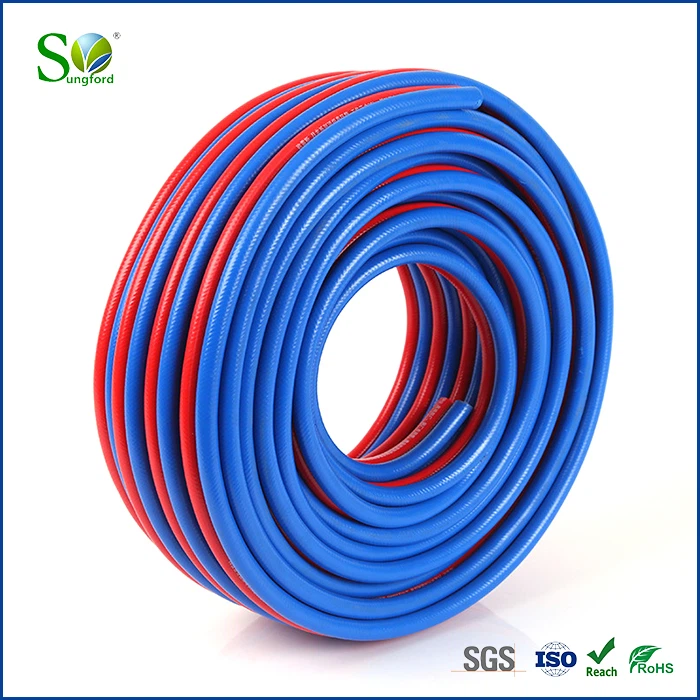
PVC welding hose is also named twin welding hose,oxygen-acetylene welding hose,it is designed for high-pressure applications. It is a superior replacement to conventional rubber hoses as it is made of PVC. This results in convenience due to lightweight and economy in use. It has superior consolidation and adhesion between the braids and covers, as compared to rubber hoses. This hose is highly acknowledged for it qualities.
PVC welding hose is made of premium quality PVC with 1 layer or 2 layers polyester yarn reinforcement with different working pressure. The surface cover can be bright or matt surface for choice.
This hose is suitable for all oxygen-acetylene welding, brazing, soldering and cutting operations. Due to light weight and flexibility, it is also preferred for long distance welding applications. This hose is available in different specifications such as length, color, working temperature & pressure and size. Apart from this, the offered PVC Welding Hose is also used for arc welding due to lower pressure drop.

Company Profile
Weifang Sungford Industrial Co.,Ltd was founded in 2005 and exported since 2008, quickly occupied the international market with stable and reliable quality and competitive price, and gained constant praise and good reputation.
Sungford Plastic is one of the most professional PVC HOSE manufacturers and suppliers in China. The tubing includes PVC Lay Flat Hose, PVC Steel Wire Hose, PVC Braided Hose,PVC Garden hose, PVC Air Hose, PVC Suction Hose, etc.
We have professional and technical staff of 48 people, totally more than 300 employees, with new product development center and Special quality control department.
90% of the export are OEM and ODM production, including customers' brand, size, thickness,color,hardness, color,packing, printing, etc.
Why Choose Us
Factory
As the scale continues to expand, we add new workshops and equipments recent years, Now the factory occupies an area of over 50,000 square meters, more than 70 production lines, the annual production capacity of 28,000 tons.
Professional Team
We have professional and technical staff of 48 people, totally more than 300 employees, with new product development center and Special quality control department.
Certificate
With mature and advanced Korea production technology, strict quality control, Our corporation have passed ISO9001international quality conformity, REACH ,ROHS and SGS third party certification.
Advanced Equipment
Korea one-step extrusion technology,advanced granulator, extruder, quality testing equipment, packing machine, etc.


What is Welding Hose?
Welding hoses are a type of hose that is specifically designed for use in welding applications. These hoses are used to transport gases and other materials that are used in the welding process and are an essential tool for ensuring the safety and efficiency of welding operations.
One of the primary uses of welding hoses is to transport welding gases, such as oxygen and acetylene. These gases are used in a variety of welding processes, including oxy-fuel welding and cutting, and are typically stored in high-pressure tanks. Welding hoses are used to connect the tanks to the welding equipment, allowing the gases to be transported safely and efficiently.
Welding wire is a thin, electrically conductive material that is used to create the electrical arc that is necessary for welding. Flux is a chemical substance that is used to protect the weld area from contaminants, and to improve the quality of the weld.
Benefits of Welding Hose
Quality of the Hose
Reputable manufacturers often provide welding hoses that are more resilient and long-lasting. Purchasing a high-quality hose from a reputable welding hose manufacturers can considerably increase its longevity.
01
Frequency of Use
A welding hose will lose its effectiveness more quickly the more often it is used. Continuously being exposed to high-pressure gases, temperature changes, and bending strains may cause the hose to progressively deteriorate over time.
02
Maintenance Practices
The longevity of a welding hose may be increased with regular maintenance and careful handling. Important maintenance procedures include checking the hose for damage, cleaning it often, and storing it appropriately when not in use.
03
Operating Conditions
A welding hose’s degeneration may be sped up by harsh working circumstances including very high or low temperatures, chemical exposure, or abrasive surroundings. It’s crucial to choose a hose that is appropriate for the particular operating circumstances to which it will be subjected.
04
What are the Different Types of Welding Hoses?
There are three types of welding hoses: rubber, metal, and plastic. Each type has its advantages and disadvantages that you need to consider when choosing the right one for your needs.
Rubber
Rubber is the most popular type of gas welding hose. Not only is it easy to maneuver, but it is also long-lasting and lightweight at the same time. However, it is also the most expensive type of hose. In addition, a rubber hose is not compatible with all types of gases, so check compatibility before purchasing.

Metal
Metal welding hoses are less popular than rubber hoses, but they offer some advantages. They are more durable and can be used in higher temperatures. However, they are also heavier and more difficult to maneuver. It is important to note that metal hoses are incompatible with all types of gases.

Plastic
Plastic welding hoses are the lightest and easiest to maneuver but are also the least durable. They are less expensive than rubber or metal hoses but incompatible with all types of gases. Therefore, it is important to check compatibility before using a plastic hose.
Type of Welding Hose

Rubber Hoses
Rubber welding hoses are single hoses that are designed to transport a single type of gas, either acetylene or propane. They are known for their flexibility, ease of use, and durability. Rubber hoses are suitable for light to medium-duty welding tasks and are a cost-effective option for many welders.
Twin Hoses
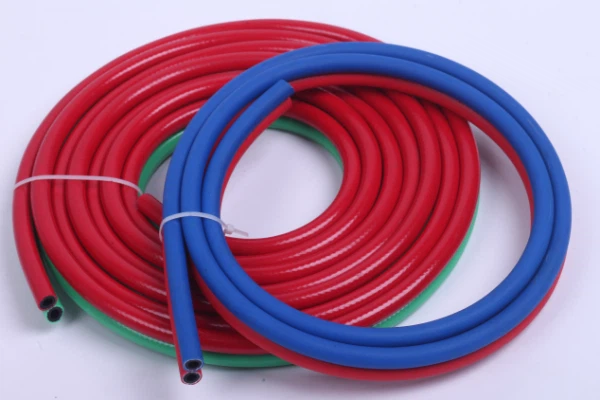
Twin welding hoses, as the name suggests, come as a pair of hoses joined together. One hose transports the fuel gas, while the other carries oxygen. They are often color-coded, with the fuel gas hose being red and the oxygen hose being green. Twin hoses are preferred for heavy-duty welding applications as they offer increased safety and efficiency by keeping the gases separate.

Difference Between Rubber Hose and Welding Hose

Gas Separation
The most significant difference between rubber hoses and twin welding hoses in how they handle gas separation. Rubber hoses transport only one type of gas, making them more suitable for basic welding tasks where only one gas is needed. On the other hand, twin hoses keep the gases separated, ensuring there is no risk of accidental mixing, which is vital for critical welding applications.

Safety
Safety is paramount in welding operations, and the type of hose used can significantly impact it. Rubber hoses, being single hoses, are more prone to kinking and tangling. This can create hazards and potentially lead to accidents. Twin hoses, with their durable construction and gas separation feature, offer better safety and are less likely to tangle or kink.
Versatility
For welders who perform various types of welding tasks, the versatility of equipment is essential. Rubber hoses are limited to carrying a single gas, which may require switching hoses for different applications. Twin hoses, with their ability to transport both fuel gas and oxygen simultaneously, provide more versatility and convenience to the welder.

Burst Resistance
Burst resistance is another critical factor to consider. In this aspect, twin hoses have the advantage due to their sturdy construction and gas separation design. Rubber hoses, while durable, may be more susceptible to bursting when subjected to extreme conditions or mishandling.
It is well known that hot work operations including welding, cutting and brazing are associated with many heath and safety hazards as well as being a source for fires. Hot work takes place daily in various locations on campus by staff, faculty, contractors and students. Additionally, students may perform these operations off-campus while working on projects associated with the University (for example, construction of homecoming floats).
It is necessary to wear safety glasses when you start welding work. The welding hose is connected with welding pot. Safety glasses should be worn under the welding helmet while welding. Hot metal from welding will fly in all directions and can occasionally end up under the helmet. Twin line welding hose blue and red or green and red will be connected with some quick couplings and assembled with some welding guns according to EN559 or ISO standards.
For gas welding work, quality twin line hose is very important. The chemically bonded dual hoses provide easier hose management and handling than independent single lines.
The color coding allows easy identification for quick and accurate installation, and the cover resists abrasion and weathering to provide maximum performance.
How to Select the Right Size of Welding Hose for a Specific Welding Job
About Welding Hose Sizes
Welding hoses come in a variety of sizes, which are primarily determined by their length and internal diameter (ID). Sizes 1/4 inch, 3/8 inch, and 1/2 inch are the most common. The length is influenced by the separation between the gas source and the welding torch, while the ID controls the gas flow rate.
Consider the Gas Flow Rate
The gas flow rate necessary for your welding task should be the first consideration when choosing a welding line. Different gas flow rate recommendations are made for various welding procedures and torch types. You must compare the ID of the hose with the advised gas flow rate in order to establish the proper hose size.
Consider the Length of the Hose
Another important thing to think about is the welding hose's length. It should be long enough to reach the welding area from the gas supply without adding too much slack or strain. Longer hoses may cause pressure reductions and reduced gas flow, which might impact the welding procedure.
Matching Hose Connections
It is vital to confirm compatibility with your current equipment when choosing a welding hose. The fittings on your welding equipment and torch must line up with the hose connectors. Threaded, barbed, or quick-connect fittings are examples of common connection types. In order to prevent leaks, a reduction in gas flow, and other risks, make sure the hose fittings are suitable with your machinery.
Consider Safety Factors
Safety in welding operations should always come first. Consider characteristics like longevity, flexibility, and resilience to heat, flames, and chemicals when selecting a welding hose. High-quality reinforced hoses are more resistant to deterioration, increasing their lifetime and safety. When buying welding hoses, it's also a good idea to look for industry certifications or standards compliance.
How to Properly Maintain and Store a Welding Hose
Regular Inspection
The first step in maintaining a welding hose is routine examination. Check the hose thoroughly before each usage for any indications of wear, damage, or leaks. Check the area for bulges, cracks, cuts, and abrasions, particularly close to the fittings and connections. To prevent any possible safety risks, it is essential to replace the hose right once if any damage is found.
Cleaning
The welding hose has to be cleaned regularly as part of maintenance. Make careful to clean the hose of any dirt, debris, or welding slag after each usage. To carefully clean the hose's outside, use a soft cloth or brush. Avoid using powerful chemicals or abrasive materials since they may harm the hose. Always make sure the hose is thoroughly dry before storing it as well.
Proper Handling and Storage
A welding hose should always be handled with caution. Do not drag or pull the hose firmly as this might cause harm. Instead, carefully coil the hose and carry it by holding on to the handles or other suitable grip locations. A properly wound hose helps avoid kinks and tangles that might obstruct the passage of gases.
Choose a clean, dry location for storage that is distant from heat sources, intense sunshine, severe temperatures, and other harsh elements. The hose may be kept in form and free from tangling by coiling it on a flat surface or hanging it from a hose reel. Additionally, keep the hose away from anything sharp or other potentially damaging equipment.
Fittings and Connections
Make sure the welding hose's connections and fittings are tight and secure by routinely inspecting them. Gas leaks from loose fittings may compromise performance and safety. Use a wrench or other suitable equipment to tighten any loose fittings, but take care not to over-tighten as this might harm the fittings or the hose.
Protection from Hazards
It is important to shield the welding hose from possible dangers in order to preserve its life. Keep the hose away from open flames, sharp edges, sparks, and large pieces of equipment. Protect the hose from any possible physical harm causes, such as large machinery or automobiles. By taking these safety measures, you may lower your risk of accidents and extend the life of your hose.
Our Factory
As the scale continues to expand, we add new workshops and equipments recent years, Now the factory occupies an area of over 50,000 square meters, more than 70 production lines, the annual production capacity of 28,000 tons. We have professional and technical staff of 48 people, totally more than 300 employees, with new product development center and Special quality control department.


Certificate


FAQ
As one of the most professional welding hose manufacturers and suppliers in China, we're featured by quality products and good service. Please rest assured to buy welding hose made in China here from our factory.