

As a supplier of PU air ducting hoses, I've encountered numerous inquiries regarding the pressure - retaining ability of these essential components. In this blog, I'll delve into the science behind the pressure - retaining ability of PU air ducting hoses, explore its influencing factors, and discuss its importance in various applications.
Understanding the Basics of Pressure - Retaining Ability
The pressure - retaining ability of a PU air ducting hose refers to its capacity to maintain a certain level of internal pressure without significant leakage or failure. This property is crucial as it ensures the efficient and safe operation of systems that rely on the transportation of air or other gases under pressure.
PU, or polyurethane, is a versatile polymer known for its excellent mechanical properties. When used in air ducting hoses, it provides a balance of flexibility, durability, and chemical resistance. The pressure - retaining ability of a PU air ducting hose is determined by several factors, including the material's inherent strength, the design of the hose, and the manufacturing process.
Material Strength
The quality of the polyurethane used in the hose plays a vital role in its pressure - retaining ability. High - grade PU materials have better tensile strength and tear resistance, which allows them to withstand higher internal pressures without rupturing. Additionally, the material's elasticity is important. A more elastic PU hose can expand slightly under pressure and then return to its original shape without losing its integrity, reducing the risk of leaks.
For example, our PU Air Ducting Hose is made from premium - grade polyurethane. Through strict material selection and quality control, we ensure that the hose has the necessary strength to retain pressure effectively. This high - quality material also provides resistance to abrasion, ozone, and UV rays, which helps to maintain the pressure - retaining ability over a long service life.
Hose Design
The design of the PU air ducting hose also significantly impacts its pressure - retaining ability. The wall thickness of the hose is a key factor. A thicker wall can generally withstand higher pressures as it provides more material to resist the internal forces. However, there is a trade - off between wall thickness and flexibility. A very thick - walled hose may be less flexible, which can limit its application in some situations.
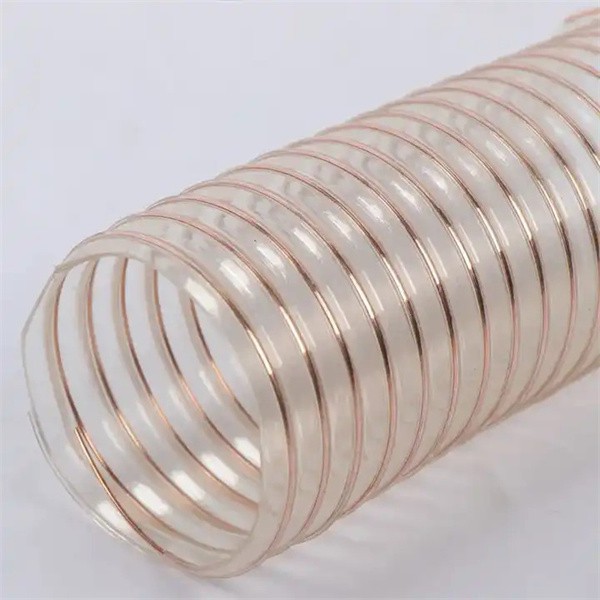
Another design aspect is the reinforcement structure. Many PU air ducting hoses, such as our PU Steel Wire Duct Hose, are reinforced with steel wires. The steel wires act as a framework, enhancing the hose's structural integrity and increasing its pressure - retaining ability. The arrangement and density of the steel wires also matter. A well - designed reinforcement structure can distribute the internal pressure evenly across the hose wall, preventing stress concentrations that could lead to failure.
Manufacturing Process
The manufacturing process of the PU air ducting hose is equally important. Precise extrusion and molding techniques are required to ensure uniform wall thickness and a smooth inner surface. Any irregularities in the wall thickness or surface can create weak points where pressure - related failures may occur.
During the manufacturing of our hoses, we use advanced production equipment and strict quality control procedures. This ensures that each hose meets the specified standards for pressure - retaining ability. We also conduct thorough testing on every batch of hoses to verify their performance under different pressure conditions.
Importance in Various Applications
The pressure - retaining ability of PU air ducting hoses is critical in a wide range of applications. In industrial ventilation systems, for instance, the hose needs to maintain a consistent pressure to ensure proper air circulation. If the pressure drops due to poor pressure - retaining ability, the ventilation efficiency will be reduced, which can lead to issues such as overheating of equipment or the accumulation of harmful gases.
In pneumatic conveying systems, where materials are transported through the air using pressure, the hose must be able to retain the required pressure to move the materials effectively. A hose with insufficient pressure - retaining ability can result in blockages or inconsistent material flow, causing disruptions to the production process.
In automotive and aerospace applications, the hoses are often used in high - pressure environments. The ability to retain pressure safely and reliably is essential for the proper functioning of the vehicle or aircraft systems. Any pressure - related failures in these applications can have serious consequences, including safety risks.
Factors Affecting Pressure - Retaining Ability Over Time
Several factors can affect the pressure - retaining ability of PU air ducting hoses over time. Temperature is one of the most significant factors. High temperatures can cause the polyurethane material to soften, reducing its strength and elasticity. This can lead to a decrease in the pressure - retaining ability. On the other hand, extremely low temperatures can make the material brittle, increasing the risk of cracking.

Chemical exposure is another factor. If the hose comes into contact with chemicals that are incompatible with polyurethane, it can cause degradation of the material. This can weaken the hose and compromise its pressure - retaining ability. For example, some solvents or strong acids can dissolve or swell the polyurethane, leading to leaks or even complete failure.
Mechanical stress, such as bending, twisting, or abrasion, can also have a negative impact on the pressure - retaining ability. Repeated bending or twisting can cause fatigue in the material and the reinforcement structure, while abrasion can wear down the hose wall, reducing its thickness and strength.
Maintaining and Improving Pressure - Retaining Ability
To maintain the pressure - retaining ability of PU air ducting hoses, proper installation and maintenance are essential. During installation, the hose should be routed correctly to avoid excessive bending or kinking. The connectors should be properly tightened to prevent leaks at the joints.
Regular inspection is also necessary. Check the hose for signs of wear, such as cracks, abrasions, or bulges. Replace the hose if any significant damage is found. Additionally, keep the hose clean and protected from extreme temperatures and chemical exposure.
If you need to improve the pressure - retaining ability of a system, consider upgrading to a higher - quality hose or a hose with a better reinforcement structure. Our PU Steel Wire Duct Hose is a great option for applications that require high - pressure resistance.
Conclusion
In conclusion, the pressure - retaining ability of PU air ducting hoses is a complex property that is influenced by material strength, hose design, manufacturing process, and other factors. As a supplier, we are committed to providing high - quality hoses with excellent pressure - retaining ability to meet the diverse needs of our customers.
If you are in need of PU air ducting hoses for your specific application, we encourage you to contact us for more information and to discuss your requirements. Our team of experts is ready to assist you in selecting the right hose and ensuring its proper use. Whether you are in the industrial, automotive, or aerospace sector, we have the solutions to meet your pressure - related needs.
References
- "Polyurethane Handbook" by G. Oertel
- Industry standards and guidelines for air ducting hoses