

When it comes to hose clamps, one of the most frequently asked questions is about the minimum diameter available. As a reputable supplier of Hose Clampls, I understand the importance of providing accurate and detailed information on this topic. In this blog post, I will delve into the factors that determine the minimum diameter of hose clamps, the typical range of minimum diameters in the market, and how these specifications impact various applications.
Factors Affecting the Minimum Diameter of Hose Clamps
The minimum diameter of a hose clamp is influenced by several key factors, including the manufacturing process, the material used, and the intended application.
Manufacturing Process
The method used to produce hose clamps plays a significant role in determining the smallest diameter that can be achieved. For example, in the case of worm drive hose clamps, which are one of the most common types, the manufacturing process involves stamping and forming metal strips. The precision of the stamping and forming equipment limits the minimum width of the metal strip, which in turn affects the minimum diameter of the clamp. As technology advances, manufacturers are able to use more precise machinery, allowing for the production of smaller diameter hose clamps.
Material Selection
The material from which the hose clamp is made also impacts its minimum diameter. Different materials have different physical properties, such as strength, flexibility, and ductility. For instance, stainless steel is a popular choice for hose clamps due to its corrosion resistance and high strength. However, stainless steel may have limitations in terms of how thin it can be formed into a clamp without losing its structural integrity. On the other hand, plastic hose clamps can be manufactured in smaller diameters more easily because plastic is more flexible and can be molded into intricate shapes.
Intended Application
The specific application for which the hose clamp will be used is another crucial factor. In some applications, such as in medical devices or small electronic equipment, there is a need for extremely small diameter hose clamps to secure tiny hoses or tubes. These applications often require high precision and may have strict requirements for the clamp's size and performance. In contrast, industrial applications may have larger diameter requirements, but they may also demand clamps with higher strength and durability.
Typical Range of Minimum Diameters in the Market
The minimum diameter of hose clamps available in the market can vary widely depending on the type of clamp and the manufacturer. Here is a general overview of the minimum diameters for some common types of hose clamps:
Worm Drive Hose Clamps
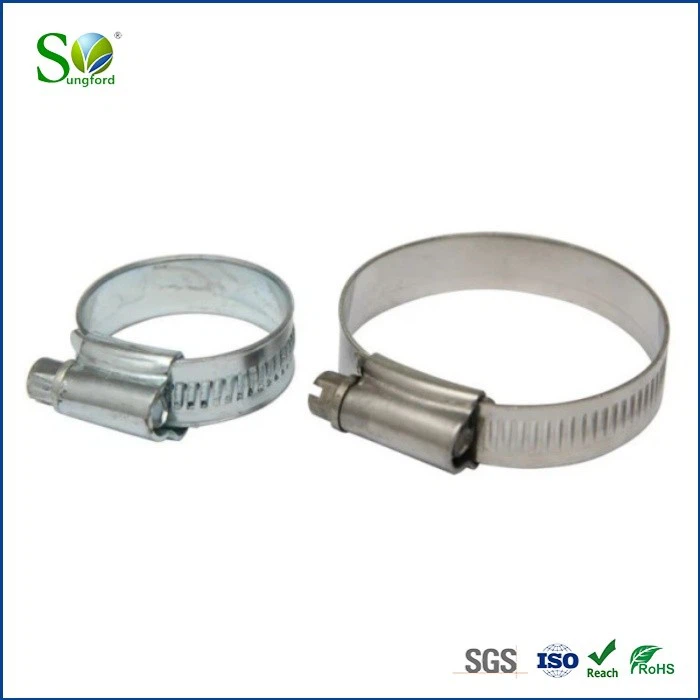
Worm drive hose clamps are known for their versatility and wide range of applications. The minimum diameter of worm drive hose clamps typically starts at around 6mm to 8mm. These smaller diameter clamps are often used in automotive, plumbing, and HVAC systems for securing small hoses.
Spring Hose Clamps
Spring hose clamps, also known as constant tension clamps, are designed to provide a constant pressure around the hose. The minimum diameter of spring hose clamps can be as small as 3mm to 5mm. These clamps are commonly used in applications where a tight seal is required, such as in fuel lines and coolant systems.
T-Bolt Hose Clamps
T-bolt hose clamps are heavy-duty clamps that are often used in high-pressure applications. The minimum diameter of T-bolt hose clamps usually starts at around 25mm to 32mm. These larger diameter clamps are commonly found in industrial settings, such as in heavy machinery and large-scale plumbing systems.
Impact of Minimum Diameter on Applications
The minimum diameter of a hose clamp can have a significant impact on its performance and suitability for different applications.
Sealing Performance
In applications where a tight seal is essential, such as in fluid transfer systems, the minimum diameter of the hose clamp must be carefully selected to ensure proper sealing. If the clamp is too large for the hose, it may not provide enough pressure to create a leak-proof seal. Conversely, if the clamp is too small, it may damage the hose or prevent it from being installed correctly.
Structural Integrity
The minimum diameter of a hose clamp also affects its structural integrity. Smaller diameter clamps may be more prone to bending or breaking under high pressure or stress. Therefore, it is important to choose a clamp with a diameter that can withstand the specific conditions of the application.
Installation and Maintenance
The size of the hose clamp can also impact the ease of installation and maintenance. Smaller diameter clamps may require specialized tools for installation, and they may be more difficult to handle and adjust. Additionally, maintenance tasks such as replacing a damaged clamp may be more challenging with smaller diameter clamps.
Choosing the Right Minimum Diameter Hose Clamp
When selecting a hose clamp, it is important to consider the following factors to ensure you choose the right minimum diameter:

Hose Size
The first step is to determine the size of the hose or tube that the clamp will be used with. Measure the outer diameter of the hose accurately to select a clamp with a compatible minimum diameter.
Application Requirements
Consider the specific requirements of the application, such as the pressure, temperature, and chemical environment. Choose a clamp material and design that can withstand these conditions.
Manufacturer's Recommendations
Refer to the manufacturer's specifications and recommendations for the hose clamp. They can provide valuable information on the minimum diameter, maximum tightening torque, and other important details.
Contact Us for Your Hose Clamp Needs
As a leading supplier of Hose Clampls, we offer a wide range of hose clamps in various sizes and materials to meet your specific requirements. Whether you need a small diameter clamp for a delicate application or a heavy-duty clamp for an industrial setting, we have the expertise and products to help you.
In addition to hose clamps, we also supply Hose Couplings that are designed to work seamlessly with our clamps. Our team of experts is always available to provide technical support and advice on choosing the right products for your needs.
If you are interested in purchasing hose clamps or have any questions about our products, please feel free to contact us. We look forward to working with you and helping you find the perfect solution for your hose clamping needs.
References
- "Handbook of Hose Fittings and Couplings" - A comprehensive guide to hose fittings and couplings, including information on hose clamps.
- Manufacturer's catalogs and technical documents for hose clamps.
- Industry standards and specifications for hose clamps.