

What is the maximum pressure a hose fitting can withstand?
As a seasoned supplier of hose fittings, I often get asked about the maximum pressure that these crucial components can withstand. Understanding this parameter is not just important for engineers and technicians; it's vital for anyone involved in industries where fluid or gas transfer through hoses is a regular operation.
Factors Affecting the Maximum Pressure Rating
The maximum pressure a hose fitting can endure is influenced by several key factors. First and foremost is the material from which the fitting is made. Different materials have varying levels of strength and durability. For instance, stainless - steel fittings are known for their high corrosion resistance and excellent strength. They can typically withstand relatively high pressures, making them suitable for applications in harsh environments such as chemical processing plants or marine settings. On the other hand, brass fittings, while still strong, may have a lower maximum pressure rating compared to stainless steel. Brass is more malleable, which can be an advantage in some installation scenarios, but it may not be the best choice for extremely high - pressure applications.
The design of the hose fitting also plays a significant role. A well - designed fitting will distribute the pressure evenly across its structure, reducing the risk of weak points that could lead to failure. For example, fittings with smooth internal surfaces minimize turbulence, which can cause additional stress on the fitting walls. Some fittings are designed with reinforced areas or special geometries to enhance their pressure - handling capabilities.
The type of connection used in the fitting is another critical factor. Threaded connections are common, but their pressure - holding capacity depends on the quality of the threads and the tightness of the connection. A loose or poorly threaded connection can lead to leaks or even complete failure under pressure. Compression fittings, on the other hand, rely on a compression sleeve to create a tight seal. The proper installation of compression fittings is crucial for achieving their maximum pressure rating.
Determining the Maximum Pressure Rating
Manufacturers typically provide a maximum pressure rating for their hose fittings. This rating is determined through a series of rigorous tests. These tests simulate real - world conditions as closely as possible, subjecting the fittings to increasing pressures until they fail. The maximum pressure at which the fitting still functions without significant leakage or structural damage is then recorded as its maximum pressure rating.
However, it's important to note that the actual maximum pressure a fitting can withstand in a real - world application may be lower than the manufacturer's stated rating. This is because real - world conditions can be more complex than those in a controlled test environment. Factors such as temperature, vibration, and the type of fluid or gas being transported can all affect the fitting's performance. For example, high - temperature fluids can cause the material of the fitting to expand, which may reduce its strength and pressure - holding capacity.
Importance of Staying Within the Pressure Rating
Exceeding the maximum pressure rating of a hose fitting can have serious consequences. At best, it can lead to leaks, which can result in the loss of valuable fluids or gases, as well as potential environmental contamination. At worst, it can cause a catastrophic failure of the fitting, leading to equipment damage, injuries, or even fatalities. For example, in a hydraulic system, if a hose fitting fails due to over - pressure, it can cause a sudden loss of hydraulic pressure, which can lead to the malfunction of heavy machinery.

Industry Standards and Regulations
There are several industry standards and regulations that govern the maximum pressure ratings of hose fittings. These standards ensure that fittings are safe and reliable for use in various applications. For example, in the United States, the American Society of Mechanical Engineers (ASME) has developed standards for pressure - containing components, including hose fittings. These standards specify the requirements for design, materials, manufacturing, and testing of fittings to ensure their safety and performance.
Compliance with these standards is not only a legal requirement in many cases but also a best practice for ensuring the long - term reliability of hose systems. When selecting hose fittings, it's important to choose products that meet or exceed the relevant industry standards.
Applications and Their Pressure Requirements
Different industries have different pressure requirements for their hose fittings. In the automotive industry, for example, fuel lines and brake lines require fittings that can withstand relatively high pressures. Fuel injection systems can operate at pressures of several hundred pounds per square inch (psi), and brake systems can have pressures in the thousands of psi.
In the food and beverage industry, the pressure requirements are generally lower, but the fittings need to be made from materials that are safe for contact with food. These fittings typically need to withstand pressures in the range of a few psi to a few tens of psi.
In the oil and gas industry, hose fittings are often subjected to extremely high pressures. Offshore drilling operations, for example, may require fittings that can withstand pressures of tens of thousands of psi. These high - pressure applications demand the highest quality fittings made from the strongest materials.
Our Product Range and Pressure Capabilities
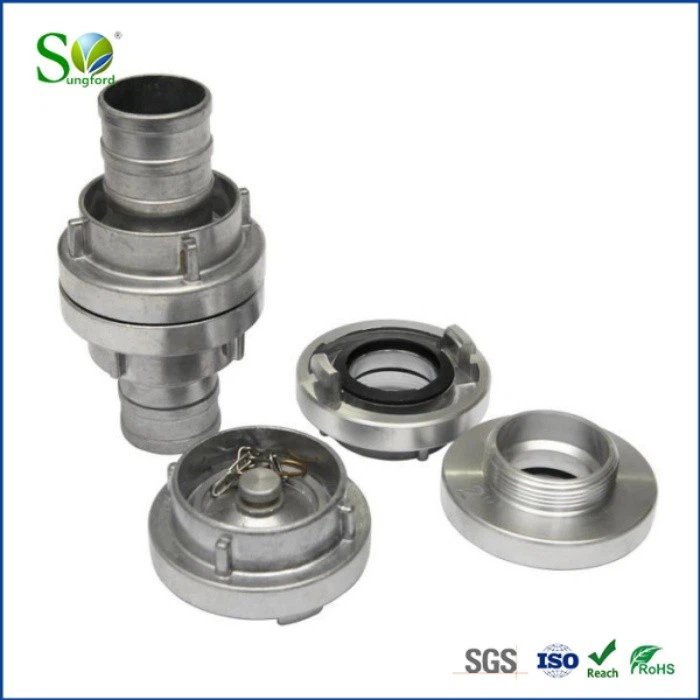
As a hose fittings supplier, we offer a wide range of products to meet the diverse pressure requirements of different industries. Our Hose Couplings are available in various materials, including stainless steel, brass, and carbon steel, and are designed to provide reliable connections at different pressure levels. Whether you need a coupling for a low - pressure water transfer system or a high - pressure hydraulic application, we have the right product for you.
Our Hose Clampls are also designed to ensure a secure and leak - free connection. They are available in different sizes and materials to accommodate various hose diameters and pressure requirements. We use high - quality materials and advanced manufacturing techniques to ensure that our clamps can withstand the pressures associated with your specific application.
Conclusion and Call to Action
Understanding the maximum pressure a hose fitting can withstand is essential for the safe and efficient operation of any hose system. By considering factors such as material, design, connection type, and real - world conditions, you can select the right fitting for your application.
If you have any questions about our hose fittings or need help in selecting the right product for your specific pressure requirements, we are here to assist you. Our team of experts has extensive knowledge and experience in the field of hose fittings and can provide you with the guidance you need. Contact us today to start a conversation about your hose fitting needs and let's work together to find the best solutions for your business.
References
- American Society of Mechanical Engineers (ASME). Boiler and Pressure Vessel Code.
- Manufacturer's technical specifications for hose fittings.
- Industry research reports on fluid and gas transfer systems.