

What's the big deal when it comes to choosing between rigid and flexible hose couplings? Well, let me break it down for you. As a supplier of these nifty little parts, I've seen it all - from massive industrial setups to simple DIY projects. So, let's get into the nitty - gritty of what sets these two types of hose couplings apart.
First up, let's talk about rigid hose couplings. These bad boys are made to be tough and unyielding. They're usually crafted from materials like metal (such as stainless steel or brass) or hard plastics. The key characteristic of a rigid coupling is its stability. Once you install it, it's not going anywhere. This is great for applications where you need a secure, leak - proof connection that won't budge.

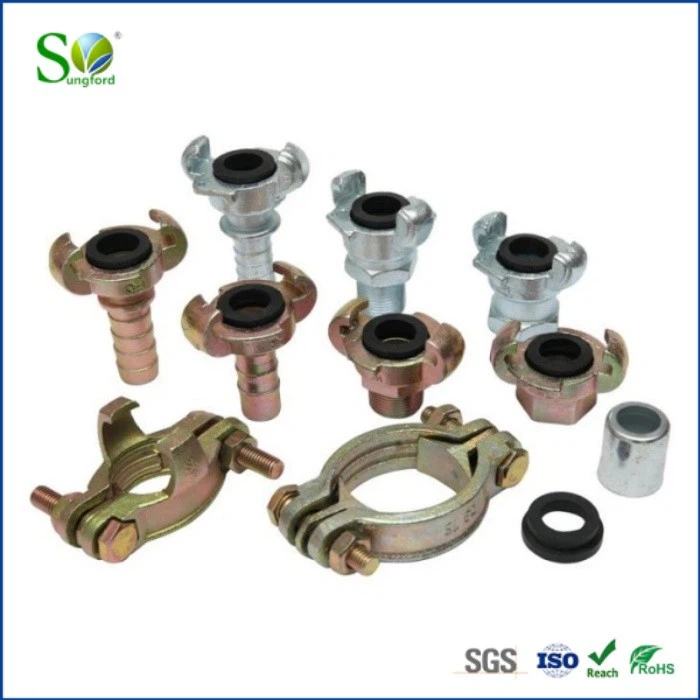
For example, in industrial piping systems, where high - pressure fluids are being transported, rigid hose couplings are the go - to. They can withstand the intense pressure without deforming or coming loose. Think about a chemical processing plant. You've got all sorts of corrosive and high - pressure chemicals flowing through pipes. A rigid coupling made of the right material can keep those chemicals contained and prevent any dangerous leaks.
Another area where rigid couplings shine is in fixed plumbing installations. In a building's water supply system, for instance, rigid couplings ensure that the pipes are securely connected. This helps maintain water pressure and reduces the risk of water damage from leaks. You don't want your pipes rattling around every time the water turns on, right? That's where rigid couplings come in to save the day.
But, of course, they're not without their limitations. Rigid hose couplings aren't very forgiving when it comes to movement or misalignment. If there's even a slight angle or shift in the pipes, it can be a real pain to install the coupling. And once it's in place, any vibration or movement can cause stress on the connection, which might eventually lead to leaks or failure. Plus, installing rigid couplings often requires special tools and a fair amount of technical know - how.
Now, let's switch gears and talk about flexible hose couplings. These are the chameleons of the coupling world. They're typically made from materials like rubber, neoprene, or flexible polymers. The main advantage of a flexible coupling is its ability to bend and adapt.
In applications where there's a lot of movement or vibration, flexible hose couplings are the best choice. Take a look at a vehicle's engine. There are all sorts of hoses carrying coolant, fuel, and air. These hoses are constantly moving as the engine runs, and there's a fair amount of vibration. A flexible coupling can absorb that movement and vibration, preventing the hoses from getting damaged or coming loose.
Flexible couplings are also a breeze to install. You don't need a bunch of fancy tools or a degree in engineering. They can easily accommodate misaligned pipes, which is a huge plus in situations where precise alignment is difficult. For DIY projects around the house, like connecting a garden hose to a sprinkler, a flexible coupling is the obvious choice. It's quick, easy, and gets the job done.
However, flexible hose couplings do have their drawbacks. They're not as strong as rigid couplings when it comes to withstanding high pressures. In a high - pressure industrial setting, a flexible coupling might not hold up, and you could end up with a major leak. Also, over time, the flexible materials can degrade, especially if they're exposed to harsh chemicals or extreme temperatures.
So, how do you decide which one to choose? It really depends on your specific needs. If you're dealing with high - pressure, fixed - position applications, rigid hose couplings are your best bet. On the other hand, if you need a coupling that can handle movement, vibration, and easy installation, go for a flexible one.
As a supplier of Hose Couplings, I've got a wide range of both rigid and flexible options to suit every need. Whether you're a big - time industrial contractor or a weekend DIY warrior, we've got the right coupling for you. And don't forget about our Hose Clampls, which can provide that extra bit of security for your hose connections.
If you're still not sure which type of coupling is right for your project, don't hesitate to reach out. We're here to help you make the best choice. Just drop us a message, and we'll work with you to find the perfect solution. Whether it's a small home project or a large - scale industrial job, we're committed to providing you with high - quality products and top - notch service. So, let's get your project up and running with the right hose couplings!
References
- General knowledge from years of experience in the hose couplings industry
- Various industry - specific manuals on piping and hose systems