

The cost of PVC food grade hoses can vary widely based on several factors, and as a supplier of these essential products, I'd like to delve into the details to help you understand what influences the price and what you can expect to pay.
Factors Affecting the Cost of PVC Food Grade Hoses
1. Hose Diameter
One of the most significant factors influencing the price of a PVC food grade hose is its diameter. Larger diameter hoses generally cost more than smaller ones. This is because they require more raw materials during the manufacturing process. For example, a 2 - inch diameter Food Grade PVC Handling Suction Hose will need a greater amount of PVC material compared to a 1 - inch diameter hose. The increased material usage not only adds to the cost of production but also affects the weight and handling of the hose, which can further impact shipping and storage costs.
2. Hose Length
The length of the hose is another crucial determinant of its price. Longer hoses mean more PVC material is used, and there are also additional costs associated with the manufacturing process to ensure the hose maintains its quality and integrity over a greater distance. For instance, a 50 - foot Food Grade PVC Steel Wire Hose will be more expensive than a 25 - foot one. Moreover, longer hoses may require more complex handling during shipping to prevent damage, which can also contribute to the overall cost.
3. Wall Thickness
The thickness of the hose wall plays a vital role in its cost. Hoses with thicker walls are generally more durable and can withstand higher pressures and more rigorous use. However, they also require more PVC material, which increases the manufacturing cost. A thick - walled Food Grade Clear Vinyl Tubing will be more expensive than a thin - walled one, but it may offer better performance and a longer lifespan, making it a cost - effective choice in the long run for applications where durability is essential.
4. Reinforcement
Some PVC food grade hoses are reinforced with materials such as steel wire or polyester yarn. Reinforcement adds strength and flexibility to the hose, allowing it to handle higher pressures and more demanding applications. For example, a Food Grade PVC Steel Wire Hose with steel wire reinforcement will be more expensive than a non - reinforced hose. The cost of the reinforcement material and the additional manufacturing steps required to incorporate it into the hose contribute to the higher price.
5. Quality and Certification
Hoses that meet strict food safety standards and have relevant certifications, such as FDA (Food and Drug Administration) approval, are generally more expensive. These certifications ensure that the hose is safe for use in contact with food products and that it meets specific quality and performance criteria. Manufacturers must invest in quality control measures and testing to obtain these certifications, which are reflected in the price of the product.
Price Range of PVC Food Grade Hoses
The price of PVC food grade hoses can range from a few dollars for a short, small - diameter, non - reinforced hose to hundreds of dollars for a long, large - diameter, reinforced hose with high - quality certifications.
For basic, small - diameter and short - length Food Grade Clear Vinyl Tubing, you might expect to pay around $5 - $20. These hoses are often used for simple applications such as transferring small amounts of food liquids in home kitchens or small - scale food processing operations.
Medium - sized Food Grade PVC Handling Suction Hose with standard wall thickness and no special reinforcement, in lengths of 25 - 50 feet, can cost between $50 - $150. These hoses are suitable for a variety of food handling applications in commercial kitchens, bakeries, and small - to - medium - sized food processing plants.

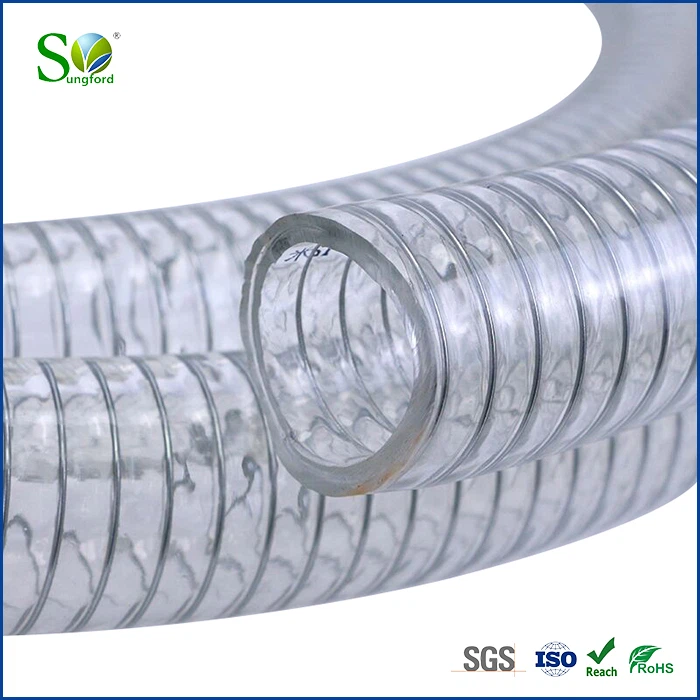
Large - diameter, reinforced Food Grade PVC Steel Wire Hose with high - quality certifications, especially those designed for high - pressure applications or use in large - scale food production facilities, can cost upwards of $200. These hoses are engineered to meet the most demanding requirements and are built to last, providing reliable performance in challenging environments.
Making the Right Choice
When considering the cost of PVC food grade hoses, it's important to look beyond the initial price and consider the long - term value. A more expensive hose may offer better durability, performance, and safety, which can save you money in the long run by reducing the need for frequent replacements and minimizing the risk of product contamination.
Before making a purchase, assess your specific needs. Consider the type of food product you'll be handling, the pressure and flow requirements of your application, and the environmental conditions in which the hose will be used. By choosing the right hose for your needs, you can ensure that you're getting the best value for your money.
Contact for Purchase and Negotiation
If you're in the market for PVC food grade hoses and want to discuss your specific requirements, we're here to help. We understand that every customer has unique needs, and we're committed to providing you with the best - suited products at competitive prices. Whether you need a small quantity for a home project or a large order for a commercial food processing facility, we can work with you to find the perfect solution. Reach out to us to start the conversation about your PVC food grade hose needs, and let's negotiate a deal that meets your budget and quality expectations.
References
- Industry reports on PVC food grade hose manufacturing and pricing.
- Technical specifications and product catalogs of PVC food grade hoses.