

The lifespan of a PU duct hose is a critical concern for both industrial and commercial users, as well as for us, a dedicated PU duct hose supplier. Understanding how long these hoses can last helps our customers make informed decisions about their purchases and maintenance schedules. In this blog, we'll delve into the factors that influence the longevity of PU duct hoses and provide insights to help you maximize their service life.
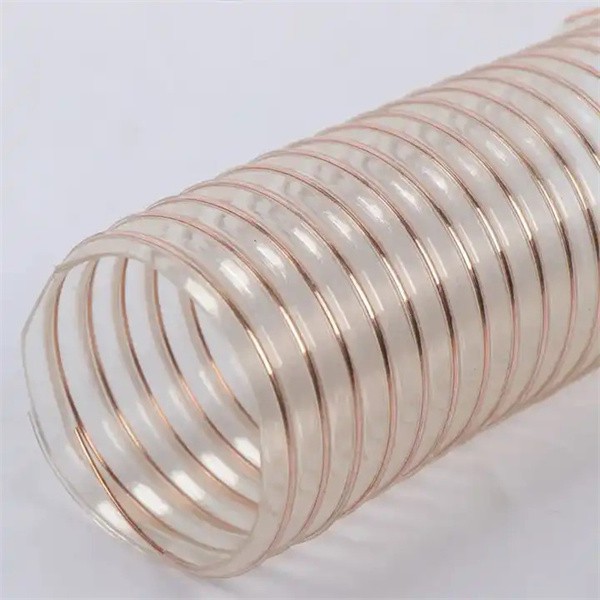
Factors Affecting the Lifespan of PU Duct Hoses
Material Quality
The quality of the polyurethane (PU) material used in the hose is fundamental to its durability. High - grade PU is formulated to resist abrasion, chemicals, and environmental factors better than lower - quality alternatives. At our company, we source only the finest PU materials for our PU Air Ducting Hose and PU Steel Wire Duct Hose. The superior quality of our raw materials ensures that our hoses have a strong base structure, which can withstand the rigors of regular use.
Operating Conditions
The environment in which the PU duct hose operates plays a significant role in determining its lifespan. If the hose is used in a clean, dry environment with minimal exposure to harsh chemicals or extreme temperatures, it can last significantly longer. For example, in a well - maintained HVAC system, where the air is filtered and the temperature is relatively stable, a PU duct hose can have a lifespan of up to 10 years.
On the other hand, in industrial settings such as chemical plants or mining operations, the hoses are exposed to abrasive particles, corrosive chemicals, and high - temperature gases. In these conditions, the lifespan of the hose can be reduced to as little as 1 - 2 years. High - pressure applications also put additional stress on the hose, potentially shortening its lifespan if the hose is not rated for such pressures.
Frequency of Use
How often the PU duct hose is used directly impacts its longevity. Hoses that are used continuously, such as those in a 24/7 manufacturing process, will experience more wear and tear compared to hoses that are used only occasionally. For continuous use, proper maintenance and regular inspections are crucial to extend the hose's lifespan.

Installation and Handling
Correct installation is essential for the long - term performance of a PU duct hose. If the hose is installed incorrectly, it may be subjected to unnecessary stress, kinking, or bending, which can lead to premature failure. For example, over - tightening clamps during installation can damage the hose material. Similarly, rough handling during transportation or storage can cause scratches or cuts on the hose surface, making it more vulnerable to damage.

Typical Lifespan Ranges
In general, a well - maintained PU duct hose used in normal operating conditions can last between 5 to 10 years. For instance, in a residential or small - scale commercial HVAC system, where the operating environment is relatively benign, the hose can reach the upper end of this range.
In industrial applications with more challenging conditions, the lifespan may be shorter. In a food processing plant, where the hose is exposed to regular cleaning agents and high - humidity environments, the lifespan might be around 3 - 5 years. In heavy - duty industrial settings like foundries or metalworking shops, where the hoses are exposed to hot debris and high - velocity airflows, the lifespan could be as short as 1 - 3 years.
Extending the Lifespan of PU Duct Hoses
Regular Inspections
Regularly inspecting the PU duct hose is the first step in extending its lifespan. Look for signs of wear, such as cracks, abrasions, or thinning of the hose wall. Check the connections and clamps to ensure they are secure and not causing any damage to the hose. Early detection of issues allows for timely repairs or replacements, preventing further damage and potential system failures.
Proper Maintenance
Proper maintenance includes cleaning the hose regularly to remove any debris or contaminants that could cause abrasion or corrosion. If the hose is used in a chemical - laden environment, it may require special cleaning agents to prevent chemical build - up. Additionally, lubricating moving parts (if applicable) and ensuring proper tension in any support structures can also contribute to the hose's longevity.
Correct Storage
When the hose is not in use, proper storage is crucial. Store the hose in a cool, dry place away from direct sunlight and sources of heat. Coil the hose neatly to avoid kinking and damage. If possible, store the hose in a protective cover to prevent dust and debris from accumulating on its surface.
Our Commitment as a Supplier
As a leading PU duct hose supplier, we are committed to providing our customers with high - quality products that offer long - term performance. Our PU Air Ducting Hose and PU Steel Wire Duct Hose are designed and manufactured to meet the highest industry standards. We use advanced manufacturing techniques and quality control processes to ensure that each hose leaving our facility is of the best possible quality.
In addition to supplying top - notch products, we also offer technical support to our customers. Our team of experts can provide advice on installation, maintenance, and replacement schedules to help you get the most out of your PU duct hoses.
Contact Us for Your PU Duct Hose Needs
If you are in the market for reliable and long - lasting PU duct hoses, we invite you to contact us. Whether you need hoses for a small - scale project or a large - scale industrial application, we have the expertise and products to meet your requirements. Our sales team is ready to assist you with product selection, pricing, and any other questions you may have. Start a conversation with us today and let us help you find the perfect PU duct hose solution for your needs.
References
- "Polyurethane Hose Handbook", Industrial Hose Manufacturers Association
- "Durability of Polymer - Based Hoses in Industrial Environments", Journal of Industrial Materials Science
- "Best Practices for Maintaining Duct Hoses", HVAC Engineering Magazine