

As a PVC gas hose supplier, I've received numerous inquiries regarding the ozone resistance of our products. Ozone, a highly reactive gas found in the Earth's atmosphere, can have detrimental effects on many materials. In this blog post, I'll delve into the topic of whether PVC gas hoses are resistant to ozone, exploring the science behind it and the implications for our customers.
Understanding Ozone and Its Effects
Ozone (O₃) is a naturally occurring gas composed of three oxygen atoms. It is formed when oxygen molecules (O₂) are broken apart by ultraviolet radiation or electrical discharges. While the ozone layer in the stratosphere protects the Earth from harmful ultraviolet rays, ground - level ozone is a pollutant that can cause damage to various materials.
Ozone is a powerful oxidizing agent. When it comes into contact with certain polymers, it can initiate a chemical reaction known as ozone cracking. This reaction breaks down the polymer chains, leading to the formation of cracks on the surface of the material. Over time, these cracks can grow deeper and wider, compromising the integrity of the material and potentially leading to failure.
PVC and Ozone Resistance
PVC, or polyvinyl chloride, is a widely used thermoplastic polymer known for its versatility, durability, and cost - effectiveness. However, its ozone resistance is a topic that requires careful consideration.
In its pure form, PVC has some degree of ozone resistance. The chlorine atoms in the PVC polymer chain provide a certain level of protection against ozone attack. Chlorine is an electronegative element, which means it can attract electrons and make the polymer less reactive with ozone. However, the ozone resistance of PVC can be significantly affected by several factors.
Additives in PVC Gas Hoses
Most PVC gas hoses are not made of pure PVC. They contain a variety of additives to enhance their performance, such as plasticizers, stabilizers, and antioxidants. Plasticizers are added to make the PVC more flexible, while stabilizers prevent the degradation of PVC due to heat, light, and other environmental factors. Antioxidants help to protect the polymer from oxidation.
Some additives can improve the ozone resistance of PVC gas hoses. For example, certain types of antioxidants can react with ozone before it attacks the PVC polymer chain, thus protecting the hose from ozone cracking. On the other hand, some plasticizers may reduce the ozone resistance of PVC. Some low - quality plasticizers can migrate to the surface of the hose over time, leaving the PVC more vulnerable to ozone attack.
Environmental Conditions
The ozone resistance of PVC gas hoses is also influenced by environmental conditions. Higher ozone concentrations, elevated temperatures, and mechanical stress can all accelerate the ozone cracking process. For example, in areas with high levels of air pollution, where ozone concentrations are relatively high, PVC gas hoses may be more likely to experience ozone damage. Similarly, if a PVC gas hose is exposed to high temperatures or is under constant mechanical stress, such as bending or stretching, the ozone resistance of the hose can be reduced.
Testing the Ozone Resistance of PVC Gas Hoses
To ensure the quality and ozone resistance of our PVC gas hoses, we conduct a series of tests. One of the most common tests is the ozone chamber test. In this test, samples of the PVC gas hose are placed in a chamber filled with a controlled concentration of ozone. The samples are then exposed to the ozone for a specified period of time under controlled temperature and humidity conditions.
After the exposure period, the samples are examined for signs of ozone cracking. The severity of the cracking is rated based on a scale, and the results are used to determine the ozone resistance of the PVC gas hose. We also conduct long - term field tests, where our hoses are installed in real - world applications and monitored over an extended period of time to assess their performance under actual environmental conditions.
Our Commitment to Ozone - Resistant PVC Gas Hoses
As a supplier of PVC gas hoses, we are committed to providing our customers with products that have excellent ozone resistance. We use high - quality raw materials and carefully selected additives to enhance the ozone resistance of our hoses. Our research and development team is constantly working on improving the formulation of our PVC gas hoses to ensure they can withstand the challenges of different environmental conditions.
We offer a range of PVC gas hoses, including our Natural LPG Gas Hose and PVC Gas Hose. These hoses are designed to meet the highest industry standards and are suitable for a variety of applications, from residential to industrial use.
Implications for Our Customers
For our customers, the ozone resistance of PVC gas hoses is an important consideration. In applications where the hoses are exposed to outdoor environments or areas with high ozone levels, choosing a PVC gas hose with good ozone resistance can help to extend the service life of the hose and reduce the risk of failure.

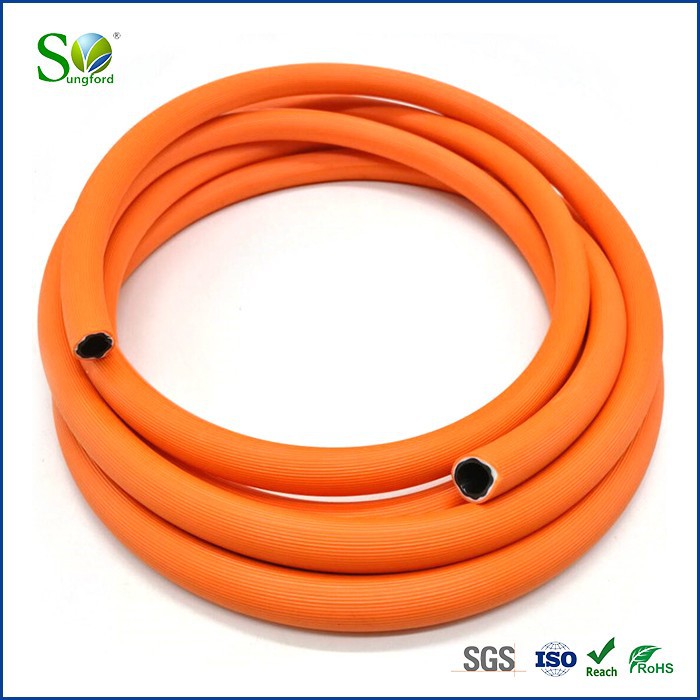
A PVC gas hose that is resistant to ozone is less likely to develop cracks, which can lead to gas leaks. Gas leaks are not only a safety hazard but can also result in increased energy costs and environmental pollution. By investing in high - quality, ozone - resistant PVC gas hoses, our customers can ensure the safety and efficiency of their gas systems.
Contact Us for Your PVC Gas Hose Needs
If you are in the market for PVC gas hoses, we invite you to contact us to discuss your requirements. Our team of experts is ready to provide you with detailed information about our products, including their ozone resistance, and help you choose the right hose for your application. Whether you need a small quantity for a residential project or a large order for an industrial installation, we can offer you competitive prices and reliable delivery.
Don't compromise on the quality and safety of your gas systems. Choose our ozone - resistant PVC gas hoses and experience the difference in performance and durability.
References
- ASTM D1149 - Standard Test Method for Rubber Deterioration - Cracking in an Ozone - Containing Atmosphere
- ISO 1431 - Rubber, vulcanized or thermoplastic - Resistance to ozone cracking
- "Polyvinyl Chloride (PVC) Handbook" by Charles A. Daniels