

Hey there! As a welding hose supplier, I often get asked about the weight of welding hoses. It might seem like a small detail, but it can actually have a big impact on your welding operations. So, let's dive into what the weight of a welding hose really means and why it matters.
First off, the weight of a welding hose isn't just some random number. It's determined by a few key factors. The material the hose is made from plays a huge role. For example, hoses made from PVC are generally lighter compared to those made from rubber. PVC is a synthetic material that offers good flexibility and is relatively lightweight, which makes it a popular choice for many welders. If you're interested in PVC hoses, you can check out our PVC Twin Welding Hose. It's a great option for those looking for a lightweight and durable solution.
On the other hand, rubber hoses tend to be heavier. Rubber is known for its toughness and resistance to abrasion, heat, and chemicals. This makes it ideal for more heavy - duty welding applications. But the trade - off is the extra weight. If you're working on a job that requires a hose to withstand a lot of wear and tear, a rubber oxygen acetylene welding hose might be the way to go. You can find more about our Oxygen Acetylene Welding Hose on our website.
The length of the hose also affects its weight. Obviously, the longer the hose, the more material there is, and thus the heavier it will be. When you're choosing a hose length, you need to consider your work area. If you're working in a small, confined space, a shorter hose might be sufficient. But if you need to move around a large workshop or job site, you'll need a longer hose. Just keep in mind that with a longer hose comes more weight, which can make it a bit more cumbersome to handle.
Another factor is the diameter of the hose. A larger diameter hose can carry more gas, which is great for high - volume welding jobs. However, it also means more material and more weight. A smaller diameter hose is lighter but might not be suitable for jobs that require a high flow rate of gas.
So, why does the weight of a welding hose matter? Well, for starters, it affects your mobility. If you're constantly moving around while welding, a heavy hose can slow you down and make it more difficult to work efficiently. You might find yourself getting tired more quickly, which can also lead to mistakes in your welding.
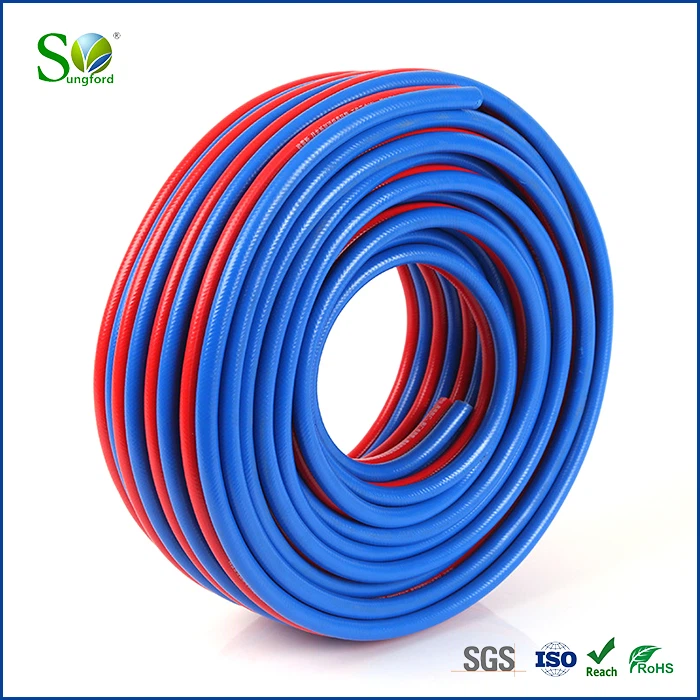

It also impacts safety. A heavy hose can be more difficult to manage, especially if you're working at heights or in awkward positions. There's a greater risk of tripping over a heavy, cumbersome hose, which could cause serious injuries. Additionally, if the hose is too heavy, it might not be properly supported, which can lead to kinking or damage to the hose over time.
Cost is another consideration. Heavier hoses often cost more due to the additional material used in their construction. If you're on a tight budget, a lighter, more affordable option might be the better choice. However, you also need to balance cost with quality and durability. A cheap, lightweight hose that breaks easily might end up costing you more in the long run.
When it comes to choosing the right welding hose for your needs, it's important to think about all these factors. Consider the type of welding you'll be doing, the work environment, and your budget. If you're not sure which hose is best for you, our team of experts is always here to help. We can provide you with detailed information about the weight, features, and benefits of each of our welding hoses.
We understand that every welding job is unique, and that's why we offer a wide range of welding hoses to suit different requirements. Whether you need a lightweight PVC twin welding hose for a small - scale project or a heavy - duty oxygen acetylene welding hose for industrial applications, we've got you covered.
If you're interested in learning more about our welding hoses or want to discuss your specific needs, don't hesitate to reach out. We're happy to have a chat with you and help you find the perfect welding hose for your job.
In conclusion, the weight of a welding hose is an important factor that can impact your welding operations in many ways. By understanding how different factors affect the weight and why it matters, you can make a more informed decision when choosing a welding hose. So, take the time to consider your options, and if you have any questions, we're just a message or call away.
References:
- Welding Equipment Handbook
- Industrial Welding Guidebooks