

As a PVC gas hose supplier, I often encounter inquiries from customers about the UV resistance of our products. UV resistance is a crucial factor when it comes to the durability and performance of PVC gas hoses, especially for those used in outdoor applications. In this blog post, I'll delve into what UV resistance means for PVC gas hoses, why it's important, and how our products measure up in this regard.
Understanding UV Resistance
UV, or ultraviolet, radiation is a part of the electromagnetic spectrum emitted by the sun. It consists of UVA, UVB, and UVC rays, with UVA and UVB being the most relevant to the degradation of materials on Earth as UVC is mostly absorbed by the ozone layer. When PVC gas hoses are exposed to UV radiation, several chemical and physical changes can occur.

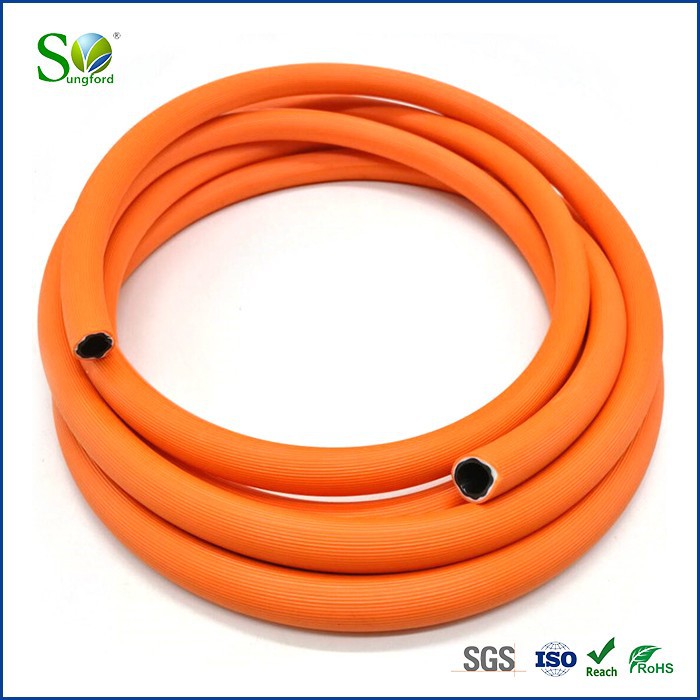
The UV rays can break down the chemical bonds in the PVC material. This process, known as photodegradation, leads to a series of problems. The hose may become brittle, lose its flexibility, and develop cracks over time. These issues not only compromise the structural integrity of the hose but also pose safety risks. A cracked or brittle hose can potentially leak gas, which is extremely dangerous in a gas-related application.
Why UV Resistance Matters for PVC Gas Hoses
Safety
Safety is the primary concern when dealing with gas hoses. A hose that has been damaged by UV radiation can develop leaks, which can lead to gas accumulation in an area. Gas leaks are a significant fire and explosion hazard, and they can also cause health problems if the gas is inhaled. For example, natural gas contains methane, which is a greenhouse gas and can displace oxygen in an enclosed space, leading to asphyxiation.
Durability
Outdoor applications demand hoses that can withstand the elements. A hose with good UV resistance will last longer, reducing the need for frequent replacements. This not only saves money in the long run but also minimizes downtime. For instance, in a commercial kitchen where a gas hose is used to supply fuel to the stoves, a durable hose ensures continuous operation without interruptions due to hose failure.
Performance
The flexibility of a PVC gas hose is essential for its proper installation and use. UV damage can make the hose stiff and difficult to bend, which can lead to improper connections and reduced gas flow. A hose that maintains its flexibility over time will provide consistent performance, ensuring that the gas is delivered at the right pressure and flow rate.
Our PVC Gas Hoses and UV Resistance
At our company, we understand the importance of UV resistance in PVC gas hoses. That's why we have developed a range of hoses that are specifically designed to withstand UV radiation.
Material Selection
We use high-quality PVC materials that have been formulated to resist UV degradation. These materials contain additives that act as UV stabilizers, which absorb and dissipate the UV energy before it can damage the PVC. The additives are carefully selected to ensure that they do not affect the other properties of the hose, such as its flexibility and chemical resistance.
Testing
Before our hoses are released to the market, they undergo rigorous testing to ensure their UV resistance. We expose the hoses to simulated UV radiation in a laboratory setting for an extended period. During this time, we monitor the hoses for any signs of degradation, such as changes in color, flexibility, and strength. Only hoses that meet our strict standards are approved for sale.
Product Range
We offer a variety of PVC gas hoses, including the Natural LPG Gas Hose and the PVC Gas Hose. Both of these hoses are suitable for outdoor use and have excellent UV resistance. The Natural LPG Gas Hose is designed for use with natural gas and liquefied petroleum gas (LPG), while the PVC Gas Hose is a versatile option that can be used in a wide range of gas applications.
Tips for Maintaining UV Resistance
While our PVC gas hoses are designed to resist UV radiation, there are some steps you can take to further extend their lifespan.
Installation
When installing the hose, try to keep it out of direct sunlight as much as possible. You can use covers or shields to protect the hose from UV exposure. If the hose needs to be installed in an area with high sunlight, consider using a UV-resistant sleeve or wrapping.
Inspection
Regularly inspect the hose for any signs of damage, such as cracks, discoloration, or loss of flexibility. If you notice any issues, replace the hose immediately to prevent safety hazards.
Storage
When not in use, store the hose in a cool, dry place away from sunlight. This will help to prevent UV damage and keep the hose in good condition.
Conclusion
UV resistance is a critical factor in the performance and safety of PVC gas hoses. Our company is committed to providing high-quality hoses that can withstand UV radiation and other environmental factors. Whether you need a hose for a residential or commercial application, our Natural LPG Gas Hose and PVC Gas Hose are excellent choices.
If you're interested in learning more about our PVC gas hoses or have any questions about UV resistance, please don't hesitate to contact us. We're here to help you find the right hose for your needs and ensure that you get the best performance and safety from your gas system.
References
- ASTM International. (20XX). Standard test methods for evaluating the effects of environmental conditions on plastics.
- National Fire Protection Association. (20XX). NFPA 54: National Fuel Gas Code.
- International Organization for Standardization. (20XX). ISO 1402: Rubber and plastics hoses and hose assemblies - Vocabulary.