

Welding is a critical process in various industries, from manufacturing and construction to automotive repair. At the heart of many welding operations are welding hoses, which play a crucial role in delivering gases such as oxygen and acetylene to the welding torch. One of the most important aspects of welding hoses is their oxygen compatibility. As a welding hose supplier, I understand the significance of this topic and am here to shed light on what oxygen compatibility means for welding hoses.
Understanding Oxygen Compatibility
Oxygen is a highly reactive gas that supports combustion and can cause materials to burn more vigorously. When it comes into contact with certain substances, especially those that are flammable or combustible, it can lead to dangerous situations, including fires and explosions. Therefore, it is essential that any equipment or material that comes into contact with oxygen is compatible with it.
In the context of welding hoses, oxygen compatibility refers to the hose's ability to safely convey oxygen without the risk of ignition or other hazardous reactions. This involves several factors, including the materials used in the hose construction, the manufacturing process, and the hose's resistance to oxidation and other chemical reactions.
Materials Used in Oxygen - Compatible Welding Hoses
The materials used in the construction of oxygen - compatible welding hoses are carefully selected to ensure safety. Common materials include synthetic rubbers and plastics.
Synthetic rubbers, such as nitrile rubber, are often used due to their excellent resistance to oxygen and other chemicals. Nitrile rubber has a high degree of flexibility, which is important for welding hoses as they need to be maneuverable during use. It also has good mechanical strength, which helps the hose withstand the pressure of the gas flowing through it.
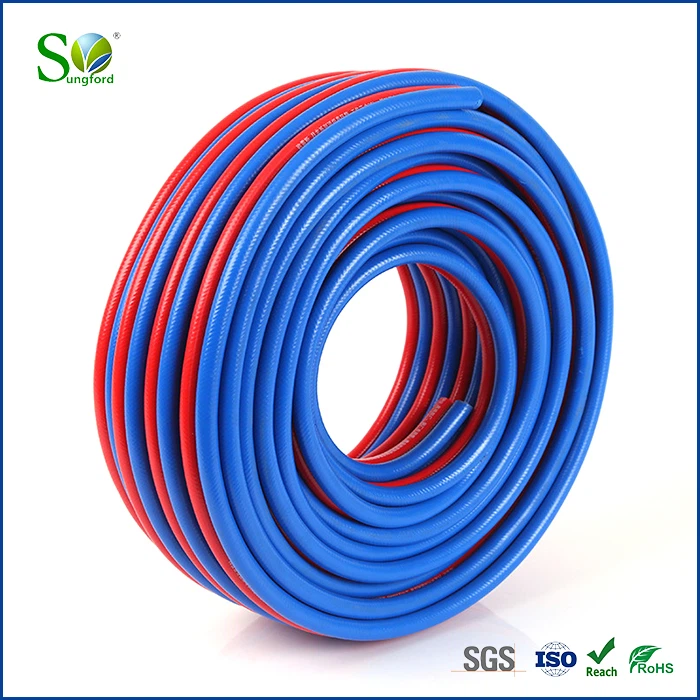
Plastics, such as PVC (Polyvinyl Chloride), are also popular choices. PVC is known for its durability, chemical resistance, and relatively low cost. Our PVC Twin Welding Hose is a great example of a PVC - based hose that is designed for oxygen compatibility. It is made from high - quality PVC materials that have been tested to meet the strict requirements for oxygen service.
Manufacturing Process and Oxygen Compatibility
The manufacturing process of welding hoses also plays a crucial role in ensuring oxygen compatibility. During the manufacturing process, the hoses need to be free from contaminants that could react with oxygen. For example, any traces of oil, grease, or other flammable substances can pose a serious risk when in contact with oxygen.
Manufacturers use strict quality control measures to ensure that the hoses are clean and free from contaminants. This may involve thorough cleaning processes during production, as well as testing the finished hoses to ensure they meet the required standards. Additionally, the hoses are often reinforced with layers of fabric or other materials to enhance their strength and durability.
Testing for Oxygen Compatibility
To ensure that welding hoses are oxygen - compatible, they are subjected to a series of tests. One of the most common tests is the oxygen index test. This test measures the minimum concentration of oxygen in a mixture of oxygen and nitrogen that will support combustion of a material. A higher oxygen index indicates better oxygen compatibility.
Another important test is the autogenous ignition temperature (AIT) test. This test determines the temperature at which a material will ignite spontaneously in an oxygen - rich environment. Welding hoses need to have a high AIT to ensure that they do not ignite under normal operating conditions.
Importance of Oxygen Compatibility in Welding Operations
Using oxygen - compatible welding hoses is of utmost importance in welding operations. A non - oxygen - compatible hose can pose a significant safety risk to the welder and the surrounding environment. If a hose were to ignite due to a reaction with oxygen, it could lead to a fire or explosion, causing serious injuries or even fatalities.
In addition to safety, oxygen compatibility also affects the performance of the welding process. A hose that is not compatible with oxygen may degrade over time, leading to leaks or other issues. This can result in inconsistent gas flow, which can affect the quality of the weld.
Our Oxygen - Compatible Welding Hoses
As a welding hose supplier, we offer a wide range of oxygen - compatible welding hoses. Our Oxygen Acetylene Welding Hose is specifically designed for use in applications where oxygen and acetylene are used. It is made from high - quality materials and has undergone rigorous testing to ensure its oxygen compatibility.
Our hoses are available in different sizes and configurations to meet the diverse needs of our customers. Whether you are a small - scale welder or a large - scale industrial operation, we have the right hose for you.
Maintenance and Care of Oxygen - Compatible Welding Hoses
Proper maintenance and care of oxygen - compatible welding hoses are essential to ensure their continued safety and performance. Here are some tips:
- Keep the hoses clean: Regularly clean the hoses to remove any dirt, debris, or contaminants. Avoid using any cleaning agents that may be incompatible with oxygen.
- Inspect the hoses regularly: Check for signs of wear, damage, or leaks. Replace any hoses that are damaged or worn out.
- Store the hoses properly: Store the hoses in a cool, dry place away from direct sunlight and sources of heat. Avoid storing them near flammable or combustible materials.
Conclusion
Oxygen compatibility is a critical aspect of welding hoses. As a welding hose supplier, we are committed to providing our customers with high - quality, oxygen - compatible hoses that meet the strictest safety standards. By understanding the importance of oxygen compatibility and taking proper care of their welding hoses, welders can ensure a safe and efficient welding process.
If you are in the market for welding hoses, we would be happy to assist you. Our team of experts can help you choose the right hose for your specific needs. Feel free to contact us to start the procurement discussion and find the perfect welding hoses for your operations.

References
- Levine, Gilbert B. "Oxygen compatibility testing of elastomers and plastics." Handbook of Plastic Elastomer and Composite Combustion. William Andrew, 2003.
- American National Standards Institute. "Safety Standard for Oxygen-Fuel Gas Systems for Welding, Cutting, and Allied Processes."