

Hey there! As a gas hose supplier, I've been getting a lot of questions lately about the difference between low - pressure and high - pressure gas hoses. So, I thought I'd sit down and write this blog to clear things up for you all.
Let's start with the basics. Gas hoses are used to transfer gas from one place to another, whether it's from a gas cylinder to a stove or from a storage tank to an industrial machine. But not all gas hoses are created equal, and the pressure they can handle is a crucial factor.
Low - Pressure Gas Hoses
Low - pressure gas hoses are designed to handle relatively low levels of gas pressure. These hoses are commonly used in residential settings, like for connecting your barbecue grill to a propane tank or your home stove to the natural gas supply.
One of the main characteristics of low - pressure gas hoses is their flexibility. They're usually made from materials like rubber or PVC, which allow them to bend easily without kinking. This flexibility makes them easy to install and maneuver around your home. For example, if you want to move your grill to a different spot in the backyard, a low - pressure gas hose can be easily repositioned.
Another advantage of low - pressure gas hoses is their affordability. Since they don't need to withstand high pressures, the manufacturing process is less complex, and the materials used are generally less expensive. This makes them a cost - effective choice for home use.
However, low - pressure gas hoses do have their limitations. They're not suitable for applications that require high gas flow rates or high pressures. If you try to use a low - pressure hose in a high - pressure situation, it can burst or leak, which is extremely dangerous.
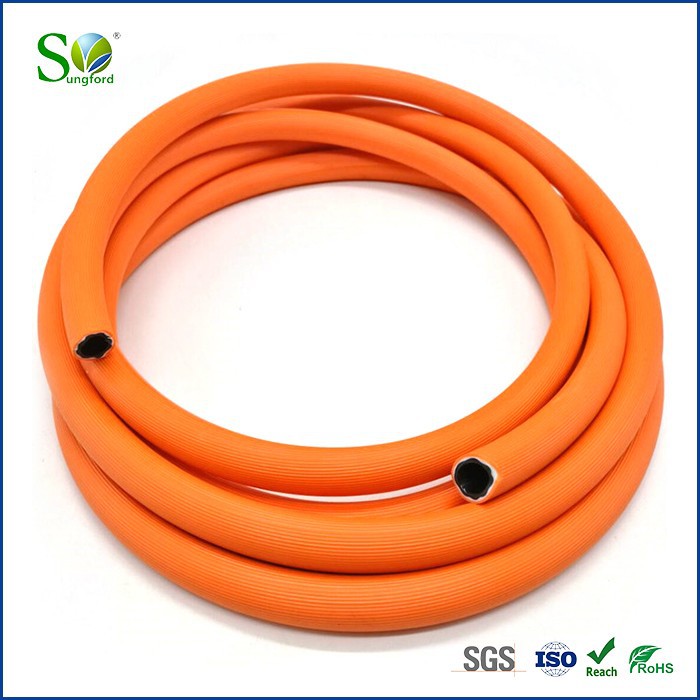
If you're interested in low - pressure gas hoses, we offer a great selection of PVC Gas Hose. These hoses are made from high - quality PVC, which provides good flexibility and durability at a reasonable price.
High - Pressure Gas Hoses
High - pressure gas hoses, on the other hand, are built to handle much higher levels of gas pressure. They're commonly used in industrial settings, such as in factories, refineries, and construction sites.
The construction of high - pressure gas hoses is much more robust than that of low - pressure hoses. They're often made from multiple layers of materials, including reinforced rubber or synthetic polymers. These layers provide strength and prevent the hose from bursting under high pressure.
High - pressure gas hoses also need to be more resistant to abrasion, chemicals, and heat. In industrial environments, hoses are often exposed to harsh conditions, and they need to be able to withstand these challenges without deteriorating.
One of the key differences between high - and low - pressure hoses is the way they're connected. High - pressure hoses usually require more secure and specialized fittings to ensure a tight seal. These fittings are designed to handle the high pressures and prevent any gas leakage.
But high - pressure gas hoses come with a higher price tag. The complex manufacturing process and the use of high - quality materials make them more expensive than low - pressure hoses. However, when it comes to safety and performance in industrial applications, the cost is often justified.
We also have a range of Natural LPG Gas Hose that are suitable for high - pressure applications. These hoses are designed to handle the specific requirements of natural LPG gas, ensuring safe and efficient transfer.
How to Choose the Right Gas Hose
Now that you know the difference between low - pressure and high - pressure gas hoses, how do you choose the right one for your needs?
First, you need to consider the application. If you're using the hose for a home appliance, like a stove or a grill, a low - pressure hose is probably sufficient. But if you're working in an industrial environment where high pressures are involved, you'll need a high - pressure hose.

Next, look at the gas type. Different gases have different properties, and some hoses are specifically designed to handle certain types of gases. For example, natural gas and propane have different chemical compositions, and you need to make sure the hose you choose is compatible with the gas you're using.
You should also consider the length of the hose. Longer hoses can cause a drop in pressure, especially in high - pressure applications. So, make sure you choose a hose that's the right length for your setup.
Finally, always check the safety ratings and certifications of the hose. A good quality gas hose should meet industry standards and have the necessary approvals to ensure safe use.
Conclusion
In conclusion, the difference between low - pressure and high - pressure gas hoses is significant. Low - pressure hoses are great for home use, offering flexibility and affordability, while high - pressure hoses are essential for industrial applications, providing strength and durability under high pressures.
If you're still not sure which gas hose is right for you, don't hesitate to reach out. We're here to help you make the best choice for your specific needs. Whether you're a homeowner looking for a simple low - pressure hose or an industrial professional in need of a high - pressure solution, we've got you covered. Contact us today to start a procurement discussion, and let's find the perfect gas hose for you.
References
- Gas Hose Manufacturer's Guides
- Industry Standards for Gas Hoses
- Safety Regulations for Gas Transfer Systems