

Hey there, fellow welding enthusiasts! I'm a supplier of welding hoses, and today I want to dig deep into the topic of what the compatibility of a welding hose with welding torches really means.
First off, let's understand the basics. A welding hose is like the lifeline between the gas source and the welding torch. It's responsible for carrying the gases - like oxygen and acetylene - that are crucial for the welding process. And a welding torch is the tool that mixes these gases and creates the flame needed for welding. So, it's super important that they work well together.
One of the key factors in hose - torch compatibility is the type of gas being used. For example, when using oxygen and acetylene, you need a hose that can handle the specific pressures and chemical properties of these gases. The Oxygen Acetylene Welding Hose is designed specifically for this purpose. It's made from materials that can withstand the high - pressure oxygen and the flammable acetylene without any risk of leakage or degradation. If you use a hose that's not compatible with these gases, it could lead to serious safety hazards, like gas leaks or even explosions.
Another aspect is the size of the hose. The diameter of the welding hose matters a great deal. A hose that's too narrow might restrict the flow of gas to the torch, resulting in a weak flame. On the other hand, a hose that's too wide can cause problems with gas pressure regulation. The right size of the hose ensures a smooth and consistent flow of gas to the torch, which is essential for a stable and efficient welding process.
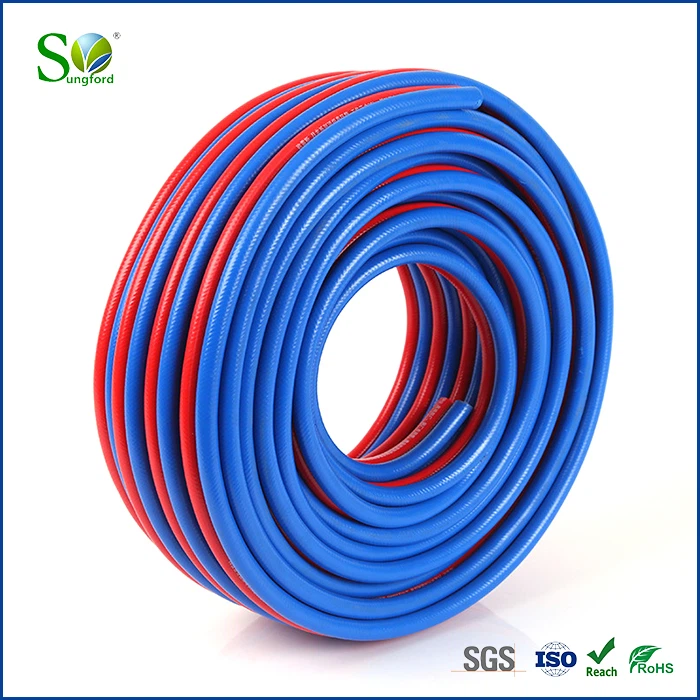
The material of the welding hose also plays a big role in its compatibility with welding torches. There are different types of materials used in making welding hoses, such as rubber and PVC. PVC Twin Welding Hoses, like the ones found at PVC Twin Welding Hose, are popular because they're lightweight, flexible, and resistant to abrasion. These properties make them easy to handle and less likely to get damaged during use. Rubber hoses, on the other hand, are known for their durability and ability to withstand high temperatures. Depending on the type of welding you're doing and the environment you're working in, you need to choose the right material for your hose.
Let's talk about the connectors. The connectors on the welding hose must match the connectors on the welding torch. A proper connection ensures that there are no leaks at the point where the hose meets the torch. There are different types of connectors available, and it's important to make sure they're compatible in terms of size and threading. If the connectors don't fit properly, you might experience gas leaks, which not only waste gas but also pose a safety risk.
Now, let's consider the pressure ratings. Welding torches have specific pressure requirements for the gases they use. The welding hose must be able to handle these pressures without bursting or leaking. For example, oxygen is typically used at higher pressures than acetylene. So, the hose for oxygen needs to have a higher pressure rating. If you use a hose with a lower pressure rating than what the torch requires, it could fail under pressure, leading to dangerous situations.

The length of the welding hose is also a factor. A longer hose can give you more flexibility in moving around the work area, but it can also cause a drop in gas pressure. If the pressure drop is too significant, it can affect the performance of the welding torch. So, you need to find the right balance between the length of the hose and the pressure requirements of the torch.
When it comes to choosing the right welding hose for your welding torch, it's not just about getting something that fits physically. You need to consider all these factors together to ensure optimal performance and safety. As a welding hose supplier, I've seen many cases where people have faced problems because they didn't pay enough attention to the compatibility between the hose and the torch.
For instance, I had a customer who was using a welding torch for some heavy - duty welding work. He initially used a hose that was too narrow for the gas flow requirements of the torch. As a result, he was getting a weak and inconsistent flame, which made his welding work difficult and of poor quality. After I recommended a wider - diameter hose that was compatible with the torch and the gases he was using, he noticed a significant improvement in his welding results.
Another customer was using a rubber hose in an environment where there was a lot of abrasion. The hose started to wear out quickly, and there were signs of damage. I suggested he switch to a PVC Twin Welding Hose, which was more resistant to abrasion. This not only solved the problem of hose damage but also made the work easier for him as the PVC hose was lighter and more flexible.
In conclusion, the compatibility of a welding hose with welding torches is a complex but crucial aspect of the welding process. It involves considering factors like the type of gas, hose size, material, connectors, pressure ratings, and length. By choosing the right welding hose that is fully compatible with your welding torch, you can ensure a safe, efficient, and high - quality welding experience.
If you're in the market for a welding hose and want to ensure the best compatibility with your welding torch, I'm here to help. I can offer you a wide range of high - quality welding hoses that are designed to meet the specific needs of different welding torches. Whether you're a professional welder or a DIY enthusiast, I can provide you with the right advice and products. Don't hesitate to reach out if you have any questions or if you're ready to start a purchase. Let's work together to make your welding projects a success!
References
- Welding Handbook, American Welding Society
- Gas Welding and Cutting Manual, Industrial Gases Association