

As a supplier of PU air ducting hoses, I've witnessed firsthand the increasing demand for high - performance, long - lasting ducting solutions in various industries. One of the most crucial aspects that customers often inquire about is the aging resistance of PU air ducting hoses. In this blog, I'll delve into what aging resistance means for these hoses, the factors that affect it, and why it matters in real - world applications.
What is Aging Resistance?
Aging resistance refers to the ability of a material to maintain its physical and chemical properties over time when exposed to various environmental factors. For PU air ducting hoses, this means withstanding the effects of heat, cold, sunlight, moisture, chemicals, and mechanical stress without significant degradation.
When a PU air ducting hose has good aging resistance, it can continue to perform its intended function, such as transporting air, fumes, or dust, without losing its flexibility, strength, or sealing properties. This is essential for ensuring the safety and efficiency of industrial processes, ventilation systems, and other applications where these hoses are used.
Factors Affecting the Aging Resistance of PU Air Ducting Hoses
1. Temperature
Extreme temperatures can have a significant impact on the aging of PU air ducting hoses. High temperatures can cause the polyurethane material to soften, leading to a loss of shape and reduced mechanical strength. Over time, this can result in the hose becoming more prone to tears and leaks. On the other hand, low temperatures can make the hose brittle, increasing the risk of cracking when bent or flexed.
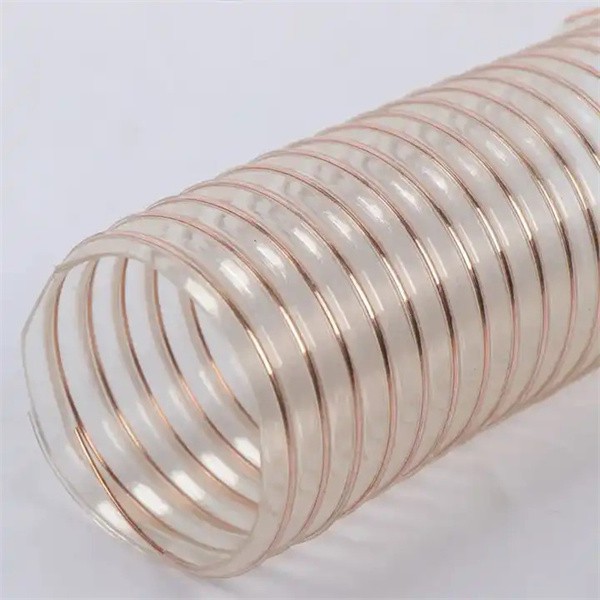
For example, in industries where hoses are exposed to hot exhaust gases or in cold storage facilities, the temperature resistance of the PU air ducting hose is of utmost importance. Our PU Air Ducting Hose is designed to withstand a wide range of temperatures, ensuring reliable performance in both hot and cold environments.

2. UV Radiation
Sunlight contains ultraviolet (UV) radiation, which can break down the chemical bonds in polyurethane. Prolonged exposure to UV rays can cause the surface of the hose to become discolored, brittle, and prone to cracking. This is particularly relevant for outdoor applications, such as in agricultural ventilation systems or construction sites where hoses may be exposed to direct sunlight for extended periods.
To enhance the UV resistance of our hoses, we use special additives during the manufacturing process. These additives act as a protective shield, absorbing and dissipating UV radiation, thereby extending the lifespan of the PU Steel Wire Duct Hose in outdoor settings.
3. Moisture
Moisture can also accelerate the aging process of PU air ducting hoses. When the hose is exposed to high humidity or comes into contact with water, it can lead to the growth of mold and mildew, which can weaken the material. Additionally, water can cause the polyurethane to swell, altering its dimensions and affecting its sealing properties.
In applications where moisture is a concern, such as in food processing plants or car washes, our hoses are treated with water - resistant coatings. These coatings prevent water from penetrating the hose and protect it from the harmful effects of moisture.
4. Chemical Exposure
PU air ducting hoses may come into contact with various chemicals, such as solvents, acids, and alkalis, depending on the application. These chemicals can react with the polyurethane material, causing it to degrade. For example, strong acids can break down the polymer chains in the polyurethane, leading to a loss of strength and flexibility.
We offer hoses with different chemical resistance ratings to meet the specific needs of our customers. Before recommending a hose, we carefully assess the chemical environment in which it will be used to ensure that the hose can withstand the chemicals it will encounter.
5. Mechanical Stress
Constant bending, stretching, and vibration can also contribute to the aging of PU air ducting hoses. These mechanical stresses can cause the material to fatigue over time, leading to cracks and failures. In industrial applications, where hoses are often moved and adjusted, it's important to choose a hose with good mechanical properties.
Our hoses are reinforced with steel wire or other materials to improve their flexibility and resistance to mechanical stress. The steel wire helix provides additional support, allowing the hose to maintain its shape even under high - pressure conditions and repeated bending.
Why Aging Resistance Matters
The aging resistance of PU air ducting hoses is not just a technical specification; it has real - world implications for our customers.
1. Cost - Effectiveness
A hose with good aging resistance has a longer lifespan, which means fewer replacements. This reduces the overall cost of ownership for our customers. Instead of having to frequently purchase new hoses due to premature aging, they can rely on our high - quality hoses to last for an extended period, saving both time and money.
2. Safety
In many applications, such as in ventilation systems for hazardous materials or in industrial processes where air quality is critical, the integrity of the air ducting hose is essential for safety. A hose that has aged prematurely and developed leaks or cracks can allow harmful substances to escape, posing a risk to workers and the environment. By choosing a hose with excellent aging resistance, our customers can ensure the safety of their operations.
3. Performance
Aging can affect the performance of the hose, such as its airflow capacity and pressure resistance. A hose that has lost its flexibility or strength due to aging may not be able to deliver the required airflow or withstand the pressure, leading to reduced efficiency in the system. Our aging - resistant hoses maintain their performance characteristics over time, ensuring that the systems they are part of operate at optimal levels.
How We Ensure Aging Resistance in Our PU Air Ducting Hoses
At our company, we take several steps to ensure that our PU air ducting hoses have excellent aging resistance.
1. High - Quality Materials
We source only the highest - quality polyurethane materials from trusted suppliers. These materials are carefully selected for their chemical and physical properties, ensuring that they have the inherent ability to resist aging.
2. Advanced Manufacturing Processes
Our manufacturing processes are designed to optimize the structure and properties of the hose. We use state - of - the - art equipment and techniques to ensure uniform thickness, proper bonding of the layers, and accurate placement of the reinforcement materials. This results in a hose that is more resistant to the factors that cause aging.
3. Rigorous Testing
Before our hoses are released to the market, they undergo a series of rigorous tests to evaluate their aging resistance. We simulate real - world conditions, such as exposure to high temperatures, UV radiation, moisture, and chemicals, to ensure that the hoses can withstand these factors over an extended period.
Conclusion
The aging resistance of PU air ducting hoses is a critical factor that affects their performance, safety, and cost - effectiveness. By understanding the factors that contribute to aging and taking steps to mitigate them, we are able to provide our customers with high - quality hoses that can withstand the test of time.
If you are in the market for PU air ducting hoses and are looking for a reliable supplier, we would be more than happy to assist you. Our team of experts can help you choose the right hose for your specific application and provide you with all the information you need. Contact us today to start a discussion about your requirements and explore how our products can meet your needs.
References
- ASTM International. (20XX). Standard test methods for evaluating the aging resistance of polymers.
- Polyurethane Manufacturers Association. (20XX). Technical guide to polyurethane materials and their properties.
- Industrial Ventilation Handbook. (20XX). Guidelines for selecting and using air ducting hoses in industrial applications.