

Hey there! As a supplier of hose clamps, I often get asked the question: "How tight should hose clamps be?" It's a crucial question because getting the tightness right can make a huge difference in the performance and longevity of your hoses. In this blog, I'm gonna break it down for you and give you all the info you need to ensure you're using hose clamps correctly.
First off, let's talk about why the tightness of hose clamps matters. When you're using hoses, whether it's in a car engine, a plumbing system, or an industrial setup, you need to prevent leaks. A loose hose clamp won't hold the hose securely to the fitting, and that can lead to fluid or gas leaks. On the other hand, if you overtighten the clamp, you can damage the hose. The hose might get crushed, which can restrict the flow of whatever's going through it, or it could even cause the hose to crack over time.
So, how do you find that sweet spot? Well, it depends on a few factors. The type of hose you're using is a big one. Different hoses have different levels of flexibility and durability. For example, a rubber hose is more flexible than a PVC hose, and it might require a different level of tightness. You also need to consider the type of fluid or gas that's going through the hose. If it's a high - pressure or corrosive substance, you'll need to make sure the clamp is tight enough to prevent leaks, but not so tight that it damages the hose.
Let's start with a general rule of thumb. When you're first installing a hose clamp, you should tighten it just enough so that you can't pull the hose off the fitting by hand. But that's just the starting point. You can use a torque wrench to get a more accurate measurement. Most manufacturers will provide a recommended torque value for their hose clamps. This value takes into account the size of the clamp, the type of hose, and the application.
For small - diameter hoses, like those used in some automotive or household plumbing applications, a torque of around 2 - 5 foot - pounds might be sufficient. Medium - sized hoses could require 5 - 10 foot - pounds, and large - diameter or high - pressure hoses might need 10 - 20 foot - pounds or more. But again, these are just general guidelines, and you should always refer to the manufacturer's recommendations.
Now, let's talk about the process of tightening the hose clamp. First, make sure the hose is properly seated on the fitting. You don't want any kinks or wrinkles in the hose. Then, place the hose clamp around the hose and over the fitting. Use a screwdriver or a clamp - tightening tool to start tightening the clamp. As you're tightening, keep an eye on the hose. You should see the hose start to compress slightly around the fitting.
If you don't have a torque wrench, you can still get a good sense of how tight the clamp should be. Start by tightening the clamp until it feels snug. Then, give it a little extra turn, but be careful not to overdo it. You can also try wiggling the hose gently. If it moves too easily, the clamp is probably too loose. If it feels like you're going to damage the hose with any more tightening, you've gone too far.
Another thing to consider is the environment in which the hose will be used. If the hose is going to be exposed to high temperatures, vibrations, or chemicals, you might need to adjust the tightness of the clamp. For example, in a high - temperature environment, the hose might expand, so you might need to tighten the clamp a bit more to prevent leaks. In a vibrating environment, you might need to use a more secure type of hose clamp, like a screw - type clamp, and make sure it's tightened properly to prevent it from coming loose.
When it comes to choosing the right hose clamp for your application, there are several types available. There are worm - drive clamps, which are the most common type. They're easy to install and can be tightened with a screwdriver. There are also spring - loaded clamps, which are great for applications where you need a quick and easy way to attach and detach the hose. And then there are T - bolt clamps, which are often used in high - pressure applications because they can provide a very tight seal. You can check out more options on our Hose Clampls page.
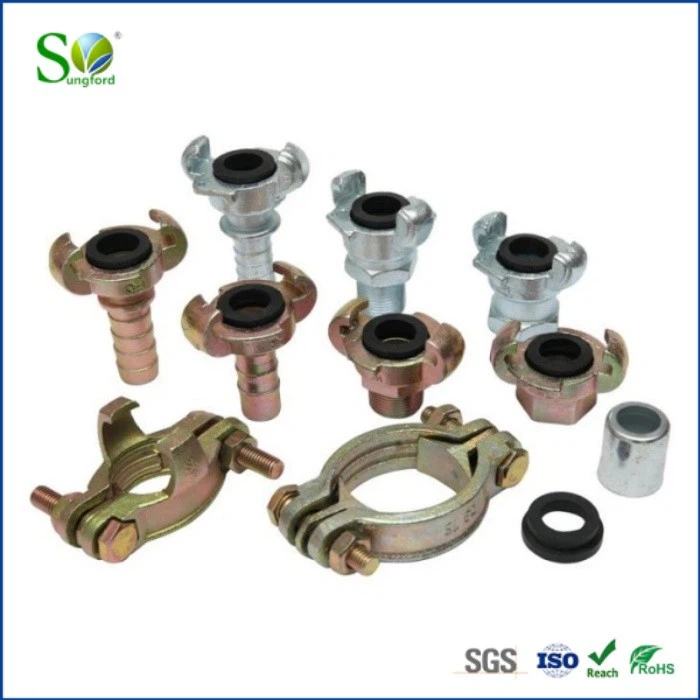

In addition to the type of clamp, you also need to consider the size. Hose clamps come in different sizes to fit different hose diameters. Make sure you choose a clamp that's the right size for your hose. If the clamp is too small, it won't fit over the hose properly. If it's too big, it won't provide a tight enough seal.
Now, let's talk about hose couplings. Hose couplings are used to connect two hoses or a hose to a fitting. They work hand - in - hand with hose clamps to ensure a secure connection. Just like with hose clamps, you need to make sure the hose coupling is properly installed and tightened. You can find more information about hose couplings on our Hose Couplings page.
To sum it up, getting the tightness of hose clamps right is all about finding the balance between preventing leaks and avoiding damage to the hose. Use the manufacturer's recommendations, consider the type of hose, the fluid or gas going through it, and the environment in which it will be used. And don't forget to choose the right type and size of hose clamp and coupling for your application.
If you're in the market for high - quality hose clamps and couplings, we're here to help. We're a leading supplier of hose clamps, and we have a wide range of products to meet your needs. Whether you're a DIY enthusiast or a professional in the industry, we can provide you with the right products and advice. So, if you're interested in our products, feel free to reach out and start a conversation about your procurement needs. We're always happy to help you find the best solutions for your applications.
References
- Various industry manuals on hose installation and maintenance
- Manufacturer's guidelines for hose clamps and couplings