

As a supplier of PU air ducting hoses, I've witnessed firsthand the significant role that flexibility plays in determining the performance of these essential industrial components. In this blog, I'll delve into the various aspects of how the flexibility of PU air ducting hoses affects their performance, drawing on my industry experience and knowledge.
1. Ease of Installation
One of the most immediate benefits of a flexible PU air ducting hose is its ease of installation. In many industrial settings, ducting systems need to navigate around obstacles, fit into tight spaces, or connect components that are not perfectly aligned. A flexible hose can be easily bent, twisted, and maneuvered to fit these complex configurations without the need for extensive additional fittings or modifications.
For example, in a manufacturing plant where space is at a premium, a rigid duct might require elaborate support structures and precise alignment to be installed correctly. In contrast, a flexible PU Air Ducting Hose can be routed around machinery and through narrow gaps with relative ease. This not only reduces the installation time but also lowers the labor costs associated with the process.
Moreover, the flexibility of the hose allows for quick and simple reconfiguration of the ducting system. If there are changes in the production layout or equipment, the flexible hoses can be easily adjusted to accommodate these new requirements, minimizing downtime and disruption to operations.
2. Resistance to Vibration and Movement
Industrial environments are often characterized by high levels of vibration and movement. Machinery, fans, and other equipment can generate significant vibrations that can cause stress and damage to ducting systems over time. A flexible PU air ducting hose is better equipped to handle these vibrations compared to rigid ducts.
The flexibility of the hose allows it to absorb and dissipate the energy from vibrations, reducing the risk of fatigue failure and leaks. The hose can bend and flex with the movement, rather than resisting it, which helps to maintain its structural integrity. This is particularly important in applications where the ducting is connected to vibrating equipment, such as compressors or pumps.
In addition, the ability of the flexible hose to move with the equipment can prevent the transmission of vibrations to other parts of the system. This can help to reduce noise levels and improve the overall working environment. For instance, in a ventilation system for a noisy factory, a flexible PU Steel Wire Duct Hose can act as a buffer, absorbing the vibrations and reducing the noise that is transmitted through the ducts.
3. Airflow Efficiency
The flexibility of a PU air ducting hose can also have a positive impact on airflow efficiency. A flexible hose can be designed to have a smooth interior surface, which reduces friction and turbulence as the air flows through the duct. This results in a more efficient airflow, with less energy loss and better distribution of air throughout the system.
In contrast, rigid ducts may have joints, seams, or irregularities in their interior surfaces that can disrupt the airflow and create areas of high resistance. These areas can cause pressure drops and reduce the overall efficiency of the system. A flexible hose, on the other hand, can be manufactured with a continuous, seamless interior, which promotes a more laminar airflow and improves the performance of the ventilation or air handling system.
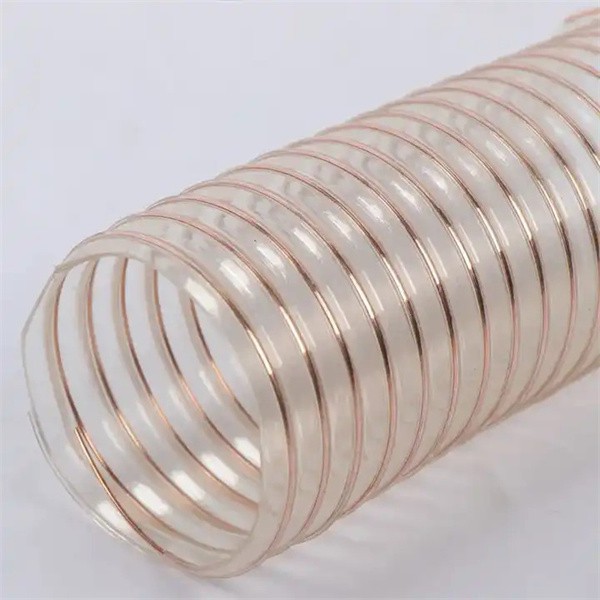

Furthermore, the ability of the flexible hose to be easily adjusted and routed allows for a more optimized layout of the ducting system. By minimizing the number of bends, turns, and restrictions in the duct, the airflow can be maximized, resulting in better ventilation and improved air quality in the working environment.
4. Durability and Longevity
While flexibility might seem like a characteristic that could compromise durability, in the case of PU air ducting hoses, it actually contributes to their long - term performance. The flexibility of the hose allows it to adapt to changes in temperature, pressure, and mechanical stress without cracking or breaking.
PU is a highly resilient material that can withstand repeated bending and flexing without losing its structural integrity. This means that the hose can be used in applications where it is subject to frequent movement or changes in operating conditions. For example, in a mobile ventilation unit, the flexible hose can be easily moved and adjusted as the unit is repositioned, without suffering from premature wear and tear.
In addition, the flexibility of the hose can help to prevent damage from external forces. If the hose is accidentally bumped or stepped on, it can bend and deform without breaking, unlike a rigid duct which might shatter or crack under the same conditions. This resilience ensures that the hose can continue to function effectively over an extended period of time, reducing the need for frequent replacements and maintenance.
5. Chemical Resistance and Compatibility
PU air ducting hoses are known for their excellent chemical resistance, and the flexibility of the material can enhance this property. The flexible nature of the hose allows it to expand and contract slightly in response to changes in the chemical environment. This can help to prevent the formation of cracks or gaps that could allow chemicals to seep through and damage the hose.
In applications where the ducting is used to transport corrosive gases or liquids, the flexibility of the PU hose ensures that it can maintain its integrity even when exposed to harsh chemicals. The hose can also be designed with special coatings or additives to further enhance its chemical resistance, making it suitable for a wide range of industrial applications.
Conclusion
In conclusion, the flexibility of PU air ducting hoses has a profound impact on their performance in various aspects. From ease of installation and resistance to vibration to airflow efficiency, durability, and chemical resistance, flexibility is a key factor that makes these hoses a preferred choice in many industrial applications.
If you're in the market for high - quality PU air ducting hoses, we are here to help. Our range of PU Air Ducting Hose and PU Steel Wire Duct Hose offers the perfect combination of flexibility and performance to meet your specific needs. Whether you're looking for a solution for a new installation or an upgrade to an existing system, we can provide you with the right product. Contact us today to discuss your requirements and start a procurement negotiation.
References
- "Industrial Ventilation Handbook", Third Edition, by the American Conference of Governmental Industrial Hygienists (ACGIH)
- "Flexible Duct Design and Installation Guide", published by the Sheet Metal and Air Conditioning Contractors' National Association (SMACNA)
- "Polyurethane Elastomers: Chemistry, Properties, and Applications" by George Woods