

Hey there! I'm a supplier of Hose Clampls, and I've seen my fair share of stubborn hose clamps over the years. Whether you're a DIY enthusiast or a professional mechanic, dealing with a clamp that just won't budge can be a real pain in the neck. But don't worry, I've got some tips and tricks that'll help you remove even the most stubborn hose clamps with ease.
First things first, let's talk about the tools you'll need. You'll definitely want to have a good pair of pliers on hand. Needle-nose pliers are great for getting into tight spaces, while locking pliers can provide extra leverage. You might also want to have a flathead screwdriver or a socket wrench, depending on the type of clamp you're dealing with.
Now, let's get into the different types of hose clamps and how to remove them.
Worm Gear Clamps
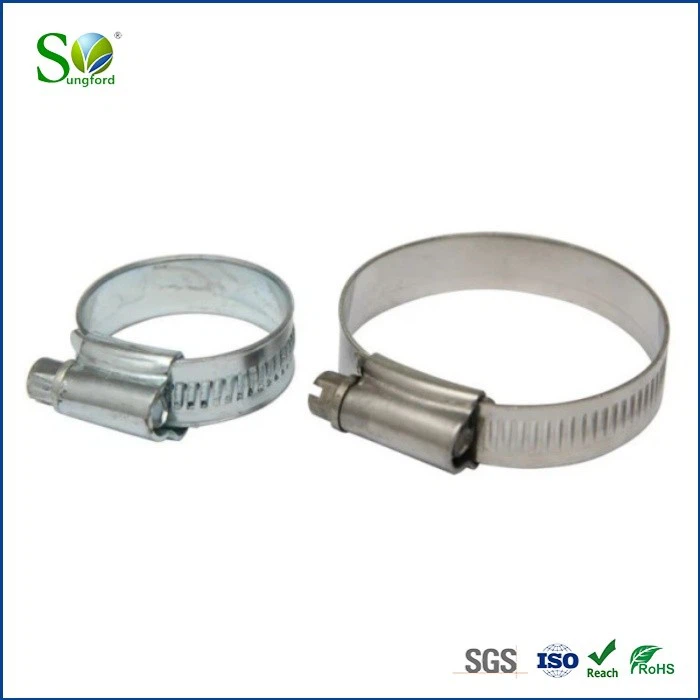
Worm gear clamps are one of the most common types of hose clamps out there. They're easy to install and adjust, but they can also be a bit tricky to remove, especially if they've been tightened down really tight.
To remove a worm gear clamp, start by locating the screw that tightens the clamp. Use your pliers or a screwdriver to turn the screw counterclockwise. If the screw is really stuck, you can try spraying some penetrating oil on it and letting it sit for a few minutes. This should help loosen up the threads and make it easier to turn.
Once you've turned the screw enough to loosen the clamp, you should be able to slide it off the hose. If the clamp is still stuck, you can try using a flathead screwdriver to pry it open slightly. Just be careful not to damage the hose or the clamp.
Spring Clamps
Spring clamps are another common type of hose clamp. They're usually made of a single piece of metal that's bent into a circular shape with a spring in the middle. To remove a spring clamp, you'll need to use a pair of pliers to compress the spring and release the tension on the clamp.
Start by locating the two ends of the spring clamp. Use your pliers to grip the ends of the clamp and squeeze them together. As you squeeze, the spring should compress and the clamp should loosen. Once the clamp is loose enough, you should be able to slide it off the hose.
T-Bolt Clamps
T-bolt clamps are a bit more heavy-duty than worm gear or spring clamps. They're often used in high-pressure applications, such as on car engines or industrial equipment. To remove a T-bolt clamp, you'll need to use a socket wrench to loosen the bolt that tightens the clamp.
Start by locating the bolt on the T-bolt clamp. Use your socket wrench to turn the bolt counterclockwise. If the bolt is really tight, you can try using a breaker bar to provide extra leverage. Once you've loosened the bolt enough, you should be able to slide the clamp off the hose.
Tips for Removing Stubborn Clamps
- Use the Right Tools: Make sure you have the right tools for the job. Using the wrong tools can damage the clamp or the hose, and it can also make the job much more difficult.
- Be Patient: Removing a stubborn hose clamp can take some time and patience. Don't rush the process, and make sure you're using the right technique.
- Lubricate the Clamp: If the clamp is really stuck, you can try lubricating it with some penetrating oil or silicone spray. This can help loosen up the threads and make it easier to turn the screw or release the tension on the clamp.
- Protect the Hose: When removing a hose clamp, it's important to be careful not to damage the hose. Use a flathead screwdriver or a pair of pliers to pry the clamp open, but make sure you're not putting too much pressure on the hose.
- Replace the Clamp: Once you've removed the old clamp, it's a good idea to replace it with a new one. This will help ensure a tight seal and prevent leaks.
Why Choose Our Hose Clamps
As a supplier of Hose Clampls, I can tell you that our products are top-notch. We offer a wide range of hose clamps in different sizes and materials to meet your specific needs. Whether you're looking for a worm gear clamp, a spring clamp, or a T-bolt clamp, we've got you covered.
Our hose clamps are made from high-quality materials that are designed to last. They're corrosion-resistant, so you don't have to worry about them rusting or deteriorating over time. And they're easy to install and adjust, so you can get the job done quickly and easily.
In addition to our Hose Clampls, we also offer a variety of Hose Couplings. Our couplings are designed to provide a secure and leak-free connection between two hoses or a hose and a fitting. They're available in different sizes and styles to fit your specific application.
Contact Us for Your Hose Clamp Needs
If you're in the market for high-quality hose clamps or hose couplings, look no further. We're here to help you find the right products for your needs. Whether you're a DIY enthusiast or a professional mechanic, we've got the products and the expertise to get the job done right.
Contact us today to learn more about our products and to place an order. We offer competitive prices, fast shipping, and excellent customer service. So don't wait any longer – let's get started on your next project!

References
- "How to Remove a Hose Clamp." The Home Depot.
- "Removing Stubborn Hose Clamps." AutoZone.
- "Types of Hose Clamps and How to Use Them." Northern Tool + Equipment.