

Hey there! As a gas hose supplier, I get a bunch of questions from customers all the time. One query that pops up quite often is, "Can I use soap and water to clean a gas hose?" It's a simple question, but the answer isn't as straightforward as you might think. So, let's dive into this topic and figure out the best way to keep your gas hoses clean and in top - notch condition.
First off, I should give you a bit of background. I've been in the gas hose business for years, and I've seen all sorts of situations. Whether it's PVC Gas Hose for residential needs or Natural LPG Gas Hose in commercial settings, proper maintenance is super important.
Now, back to the main question. Using soap and water to clean a gas hose can be okay in some cases, but not always. Let's start with the pros. Soap and water are non - toxic, easily available, and gentle on many materials. If your gas hose has just gotten a bit dirty from normal use, like some dust or light dirt, a mild soap solution can work wonders. You can mix a little dish soap with water, dip a soft cloth or sponge in it, and gently wipe down the hose. This will remove the surface grime without causing any harm to the hose material.
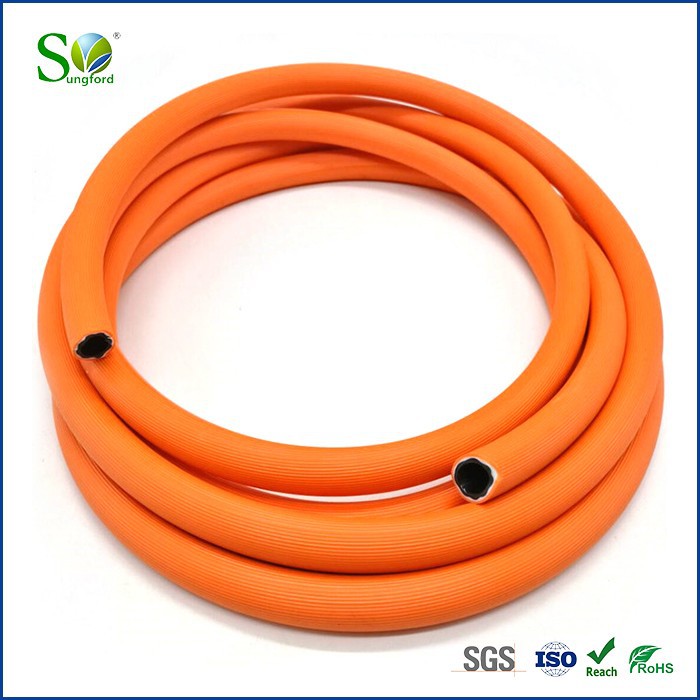

But here's where things get a bit tricky. Gas hoses are made from various materials, and not all of them react well to soap and water. For example, some hoses have special coatings or are made from materials that can be damaged by prolonged exposure to moisture. If the hose is left wet for too long after cleaning, it can lead to corrosion, especially if there are any metal parts in the fittings. Also, if the soap isn't completely rinsed off, it can leave a residue that might attract more dirt over time.
Another factor to consider is the type of dirt on the hose. If the hose has been exposed to some chemical substances, like grease or oil from a gas grill, soap and water might not be enough. In such cases, you may need a specialized cleaner that's designed to break down these substances. But before you reach for any chemical cleaner, make sure it's safe for use on your specific type of gas hose.
When it comes to the frequency of cleaning, it depends on how often you use the hose. If you use your gas hose regularly, say for a barbecue grill every weekend, it's a good idea to give it a quick wipe - down with a clean, dry cloth after each use. This will prevent the build - up of dirt and grime. As for a more thorough cleaning with soap and water, you can do it every few months, or more often if you notice a significant amount of dirt.
Now, let's talk about safety. Gas hoses are connected to a potentially dangerous gas supply, so safety should always be your top priority. Before you start cleaning, make sure the gas supply is completely turned off. Also, check the hose for any signs of damage, like cracks, cuts, or leaks. If you notice any of these issues, stop cleaning and replace the hose immediately. You don't want to take any risks with a damaged gas hose.
If you're still not sure whether it's safe to use soap and water on your gas hose, it's always a good idea to refer to the manufacturer's instructions. They'll have the most accurate information about the best way to clean and maintain the hose. Some manufacturers may recommend specific cleaning products, or they might even advise against using soap and water at all.
At our company, we're committed to providing high - quality gas hoses and also giving our customers the best advice on how to take care of them. We know that a well - maintained gas hose lasts longer and performs better, which means fewer headaches for you in the long run.
If you're in the market for a new gas hose or want to learn more about our products, we're here for you. Whether you need a PVC Gas Hose for your home kitchen or a Natural LPG Gas Hose for a larger - scale operation, we've got a wide range of options to choose from.
Contact us to discuss your specific needs, and our team of experts will be happy to help you find the perfect gas hose for your situation. We can also provide more tips on maintenance and cleaning to ensure that your hose serves you well for years to come. So, don't hesitate to reach out and start a conversation about your gas hose requirements.
References:
- General industry knowledge and experience in gas hose supply.
- Commonly available guidelines on gas hose safety and maintenance from reputable sources in the industry.