

Hey there! As a supplier of hose couplings, I often get asked this question: "Can I use a hose coupling for hot water?" Well, let's dive right into it and find out.
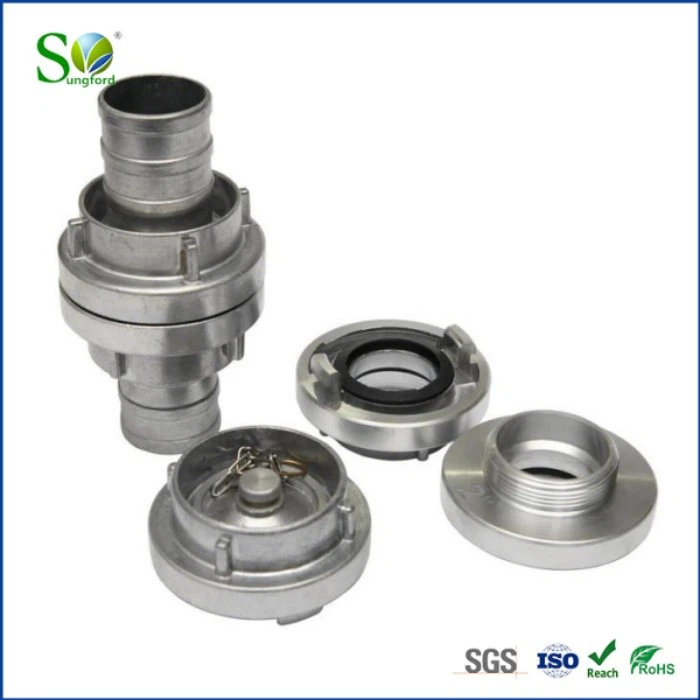
First off, it's important to understand what hose couplings are. They're those nifty little devices that connect hoses together or attach hoses to other equipment. You can check out our range of Hose Couplings on our website. They come in all sorts of shapes, sizes, and materials, and not all of them are suitable for hot water.
The Material Matters
The material of the hose coupling plays a huge role in determining whether it can handle hot water. Some common materials used for hose couplings are brass, stainless steel, and plastic.
Brass is a popular choice because it's relatively inexpensive and has good corrosion resistance. But when it comes to hot water, brass can have its limitations. High temperatures can cause brass to expand, and over time, this can lead to leaks. If the water is really hot, say above 180°F (82°C), brass might not be the best option.
Stainless steel, on the other hand, is a much better choice for hot water applications. It's highly resistant to corrosion and can withstand high temperatures without deforming. Stainless steel couplings can handle water temperatures up to around 400°F (204°C) in many cases. So, if you're dealing with hot water, stainless steel is definitely worth considering.
Plastic couplings are lightweight and affordable, but they're not usually a great choice for hot water. Most plastics start to soften and lose their shape at relatively low temperatures. Some plastics might be rated for slightly higher temperatures, but generally, they're better suited for cold water or mild temperature applications. You can use Hose Clampls in conjunction with your couplings to ensure a secure connection, but make sure the clamps are also suitable for the temperature of the water.
Temperature Ratings
Every hose coupling should have a temperature rating. This rating tells you the maximum and minimum temperatures the coupling can handle safely. When you're looking for a coupling for hot water, always check the temperature rating. If the rating is lower than the temperature of the water you'll be using, you're asking for trouble. You could end up with leaks, which can be a real pain to fix and can also waste a lot of water.
For example, if you have a hot water system that runs at 150°F (66°C), you need to make sure the coupling you choose has a temperature rating of at least 150°F or higher. It's always a good idea to have a bit of a buffer, so if possible, choose a coupling with a higher temperature rating than you actually need.
Pressure and Flow
It's not just about the temperature; pressure and flow also matter. Hot water systems often operate at higher pressures than cold water systems. A coupling that can handle the temperature but not the pressure won't work well. If the pressure is too high, it can cause the coupling to break or leak.
The flow rate of the water is also important. If the coupling restricts the flow too much, it can cause problems in your system. You want a coupling that allows for a smooth and unrestricted flow of hot water.
Installation and Maintenance
Proper installation is crucial when using hose couplings for hot water. Make sure the coupling is installed correctly and tightened to the right torque. If it's not tightened enough, it can leak, and if it's over - tightened, it can damage the coupling or the hose.
Regular maintenance is also important. Check your couplings periodically for signs of wear, corrosion, or leaks. If you notice any problems, replace the coupling as soon as possible. A small leak can turn into a big problem if left untreated.
Applications
There are many applications where you might need to use a hose coupling for hot water. In industrial settings, hot water is often used for cleaning, heating, and various manufacturing processes. In these cases, you need couplings that can handle high temperatures and pressures.
In residential settings, you might use a hose coupling for a hot water hose in your garden, for example, if you're using a hot water pressure washer. Or you might need one for a hot water supply line in your home.
Conclusion
So, can you use a hose coupling for hot water? The answer is yes, but you need to choose the right one. Consider the material, temperature rating, pressure, and flow requirements. Stainless steel is usually the best choice for hot water applications, but make sure to check the specific needs of your system.
If you're in the market for hose couplings for hot water or any other application, we're here to help. We've got a wide range of high - quality Hose Couplings that can meet your needs. Whether you're a homeowner, a contractor, or an industrial user, we can provide you with the right products.
If you have any questions or need advice on choosing the right coupling, don't hesitate to get in touch. We're always happy to chat and help you find the perfect solution for your hot water needs. Let's work together to ensure your hot water system runs smoothly and efficiently.

References
- "Handbook of Hose Fittings and Couplings" - A comprehensive guide on hose fittings and their applications.
- Manufacturer specifications for various hose coupling materials.
- Industry standards for hot water system components.