

Hey there! As a supplier of hose couplings, I often get asked a bunch of questions about the products we offer. One question that pops up quite a bit is, "Are there any anti-static properties in hose couplings?" Well, let's dive right into it and break this down.
First off, let's understand what static electricity is and why it can be a problem in the context of hose couplings. Static electricity is basically an imbalance of electric charges within or on the surface of a material. When two materials rub against each other, electrons can be transferred from one to the other. This build - up of static charge can lead to some serious issues. For example, in industries where flammable gases, vapors, or dust are present, a static spark can cause an explosion or a fire. That's a huge safety hazard, and it's why anti - static properties are so important.
Now, let's talk about hose couplings. Hose couplings are used to connect hoses together or to connect a hose to a piece of equipment. They come in all sorts of shapes, sizes, and materials. The materials used in hose couplings play a big role in determining whether they have anti - static properties or not.
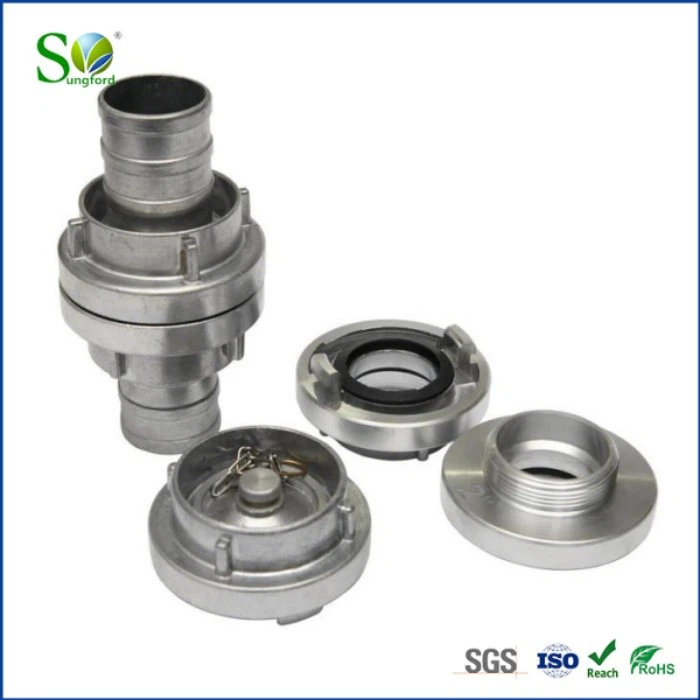

Some common materials for hose couplings include metals like stainless steel, brass, and aluminum. Metals are great conductors of electricity. When a static charge builds up on a metal hose coupling, the charge can easily flow through the metal and dissipate. So, in a way, metal hose couplings can be considered to have anti - static properties because they prevent the build - up of static electricity. For instance, stainless steel hose couplings are not only durable but also offer good electrical conductivity. They're often used in industries where static control is crucial, such as the chemical and oil industries.
On the other hand, there are hose couplings made from non - metallic materials like plastic or rubber. These materials are insulators, which means they don't conduct electricity well. Static charges can build up on the surface of plastic or rubber hose couplings and stay there. This can be a problem in certain applications. However, manufacturers have come up with solutions to this issue. Some non - metallic hose couplings are treated with anti - static additives. These additives help to reduce the build - up of static charge on the surface of the coupling.
For example, in the food and beverage industry, plastic hose couplings are commonly used because they're lightweight, corrosion - resistant, and easy to clean. But since these are often used in environments where there's a risk of static build - up, anti - static additives are added to the plastic during the manufacturing process. This way, the hose couplings can be used safely without the risk of static sparks.
Another factor to consider is the design of the hose coupling. A well - designed hose coupling should have a smooth surface. Rough surfaces can cause more friction, which in turn can lead to more static charge build - up. So, when we design our Hose Couplings, we pay close attention to the surface finish to minimize the risk of static electricity.
Now, let's talk about the testing of anti - static properties in hose couplings. There are various tests that can be conducted to determine the anti - static performance of a hose coupling. One common test is the surface resistance test. This test measures how easily an electric charge can flow across the surface of the coupling. A lower surface resistance indicates better anti - static properties.
We, as a supplier, make sure that all our hose couplings undergo rigorous testing to ensure they meet the required anti - static standards. We work with independent testing laboratories to get accurate results and to provide our customers with reliable products.
In some applications, additional grounding measures may be required. Even if a hose coupling has anti - static properties, it's still a good idea to ground the entire hose system. This can further reduce the risk of static build - up. For example, in a fuel transfer system, the hose couplings should be connected to a proper grounding system to prevent any potential static - related accidents.
Let's also touch on the importance of proper maintenance. Over time, the anti - static properties of a hose coupling can degrade. Dirt, grease, and other contaminants can build up on the surface of the coupling and affect its electrical conductivity. Regular cleaning and inspection of the hose couplings are essential to maintain their anti - static performance.
Now, if you're in the market for hose couplings and you're concerned about anti - static properties, we've got you covered. We offer a wide range of hose couplings made from different materials, each with its own set of anti - static features. Whether you need a metal coupling for a high - risk environment or a non - metallic coupling with anti - static additives, we can provide the right solution for your needs.
And if you're using hose couplings in conjunction with other components, like Hose Clampls, we can also help you ensure that the entire system is static - free. Our team of experts can offer advice on the best combination of products for your specific application.
So, if you're interested in learning more about our hose couplings and their anti - static properties, or if you're ready to make a purchase, don't hesitate to reach out. We're here to help you find the perfect hose coupling solution for your business. Whether it's for a small - scale operation or a large industrial project, we've got the products and the knowledge to support you.
In conclusion, yes, there can be anti - static properties in hose couplings, depending on the material, design, and treatment. As a supplier, we're committed to providing high - quality hose couplings that meet the safety and performance requirements of our customers. We'll continue to innovate and improve our products to ensure that they offer the best possible anti - static protection.
References
- "Handbook of Static Electricity" by Mark A. Jones
- "Industrial Hoses and Fittings: Design, Selection, and Application" by John Smith