

When it comes to automotive applications, choosing the right components can be a real headache. One question that often pops up is, "Are PU duct hoses suitable for use in automotive applications?" Well, as a PU duct hose supplier, I've had my fair share of customers asking this very question, and I'm here to give you the lowdown.
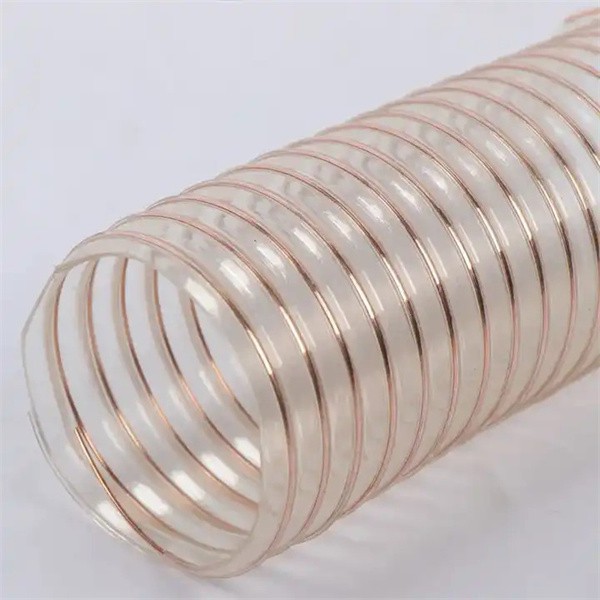
First off, let's talk about what PU duct hoses are. PU, or polyurethane, is a type of plastic that's known for its flexibility, durability, and resistance to abrasion and chemicals. These hoses typically come with a steel wire helix, which gives them extra strength and helps them keep their shape. You can check out our PU Steel Wire Duct Hose for a better idea of what I'm talking about.
Now, let's get into the nitty - gritty of why PU duct hoses might be a good fit for automotive applications.
Advantages in Automotive Use
Flexibility
In a car, space is at a premium. There are all sorts of nooks and crannies where hoses need to fit. PU duct hoses are super flexible, which means they can be bent and routed around engine components, suspension parts, and other obstacles without kinking. This flexibility makes installation a breeze, even in tight spaces. You don't have to worry about spending hours trying to force a rigid hose into place.
Durability
Automotive environments are tough. There are high temperatures under the hood, exposure to oil, fuel, and other chemicals, and constant vibrations. PU duct hoses are built to handle all of this. The polyurethane material is resistant to abrasion, so it won't wear out easily when it rubs against other parts. It can also withstand a wide range of temperatures, from the cold of winter to the heat of a long summer drive. And its chemical resistance means it won't break down when it comes into contact with automotive fluids.

Lightweight
Weight is a big deal in the automotive world. Every extra pound can affect fuel efficiency and vehicle performance. PU duct hoses are lightweight compared to some other types of hoses. This means that using them in your car won't add unnecessary weight, helping to keep your vehicle running as efficiently as possible.
Noise Reduction
Vibrations in the engine can create a lot of noise. PU duct hoses have some natural sound - dampening properties. They can absorb some of the vibrations and reduce the amount of noise that gets transmitted through the hoses, making for a quieter ride.
Specific Automotive Applications
Air Intake Systems
In an air intake system, the hose needs to deliver clean air to the engine efficiently. The flexibility of PU duct hoses allows for easy routing of the air intake path. They can be shaped to fit around other engine components while maintaining a smooth interior surface. This smooth surface reduces air turbulence, which in turn improves the engine's performance. You can take a look at our PU Air Ducting Hose for an option that's well - suited for air intake applications.
Cooling Systems
Cooling systems in cars rely on hoses to transfer coolant between the engine, radiator, and other components. PU duct hoses can handle the high temperatures and pressures associated with these systems. Their chemical resistance ensures that they won't degrade when in contact with coolant, which is crucial for the long - term reliability of the cooling system.
Exhaust Gas Recirculation (EGR) Systems
EGR systems are used to reduce emissions by recirculating a portion of the exhaust gases back into the engine. The hoses in these systems need to be able to withstand high temperatures and the corrosive nature of exhaust gases. PU duct hoses can be designed with special coatings or materials to handle these harsh conditions, making them a viable option for EGR systems.
Potential Drawbacks
Of course, no product is perfect, and PU duct hoses do have a few potential drawbacks when it comes to automotive applications.
Cost
Compared to some other types of hoses, PU duct hoses can be a bit more expensive. The manufacturing process for polyurethane hoses is more complex, and the raw materials can be costlier. However, when you consider their durability and performance benefits, the extra cost might be worth it in the long run.
UV Resistance
If the hoses are exposed to direct sunlight for long periods, the UV rays can cause the polyurethane to degrade over time. This is more of an issue for hoses that are used in external parts of the vehicle. But there are ways to mitigate this, such as using hoses with UV - resistant coatings.
How to Choose the Right PU Duct Hose for Your Automotive Needs
If you've decided that PU duct hoses are the way to go for your automotive application, here are a few things to keep in mind.
Size and Shape
Make sure you choose a hose with the right diameter and length for your specific application. You also need to consider the shape of the hose. Some applications might require a straight hose, while others might need a hose with bends or curves.
Temperature and Pressure Ratings
Check the temperature and pressure ratings of the hose. Make sure it can handle the maximum temperature and pressure that it will be exposed to in your automotive system.
Chemical Compatibility
If the hose will be in contact with automotive fluids like oil, fuel, or coolant, make sure it's chemically compatible with these substances.
In conclusion, PU duct hoses can be a great choice for many automotive applications. Their flexibility, durability, lightweight, and other benefits make them well - suited for the tough conditions under the hood of a car. While they do have a few drawbacks, with proper selection and maintenance, they can provide reliable performance for a long time.
If you're interested in learning more about our PU duct hoses or are thinking about making a purchase, don't hesitate to reach out. We're here to answer your questions and help you find the right hose for your automotive needs. Let's start a conversation and see how we can work together to get your vehicle running at its best.
References
- Automotive Engineering Handbook
- Polyurethane Materials and Applications Research Papers